

In the grand theater of sports, fans are the lifeblood that keeps the spectacle alive. Like the rising of waves, they are the beating heart of every game who lift athletes to greater heights and forge connections that transcend boundaries. Beyond their role as spectators, fans are the silent architects of the sporting ecosystem who infuse energy, purpose, and resilience. Whether braving the scorching sun in packed stadiums or rallying from afar, their loyalty is a testament to the enduring power of sport to inspire and unite.
True fans do more than watch—they participate, critique, and champion the game, pushing for better facilities, inclusivity, and broader engagement. They become storytellers, chronicle the highs and lows, amplifying the struggles of athletes, and ensure the sport reaches new audiences.
In a post-pandemic world, where the connection between the game and its followers has been tested, fans play an even more vital role. They remind us that the spirit of sport thrives not just in the competition but in the collective experience of those who live and breathe it.
To nurture the future of any sport, we must embrace and empower its fans, for they are the stewards of its legacy and the architects of its growth.
Madhu Raman (a.k.a. Harini), a dedicated and vocal supporter of Indian hockey has emerged as a key figure within the sport’s fan community with her steadfast commitment to both domestic and international tournaments. A software professional based out of Chennai, she not only follows the intricacies of Indian hockey but also actively participates in it by attending matches across the nation and, in turn, uses her platform to amplify awareness and support.
Her consistent presence at the 14th Hockey India Senior Men National Championship 2024 in Chennai, Tamil Nadu highlights her critical engagement with the fan experience that concerns issues that affect female spectators.
In a long conversation with Field Vision’s Senior Writer Ravi Teja Mandapaka, she delved into her love for the game to her childhood where she was captivated by the brilliance of legends like Dhanraj Pillai and Dilip Tirkey. “Watching them on TV during their prime years was an experience like no other—they were the reason I started following hockey so ardently,” Harini shared.
Read More: Opinion: Why a Zonal Format Could Be the Game-Changer for Senior Nationals?
This early fascination has blossomed into a deep commitment and inspired her to follow the sport at both national and international levels.
While looking back on the recently concluded Senior National Hockey Championship, Madhu highlighted several memorable matches that stood out for their intensity and skill. “The group stage clash between Maharashtra and Jharkhand, which ended in a thrilling 2-2 draw, was an absolute treat. The precision and teamwork displayed by Uttar Pradesh, especially in their quarterfinal against Tamil Nadu and the third-place playoff against Manipur, were equally remarkable,” she said.
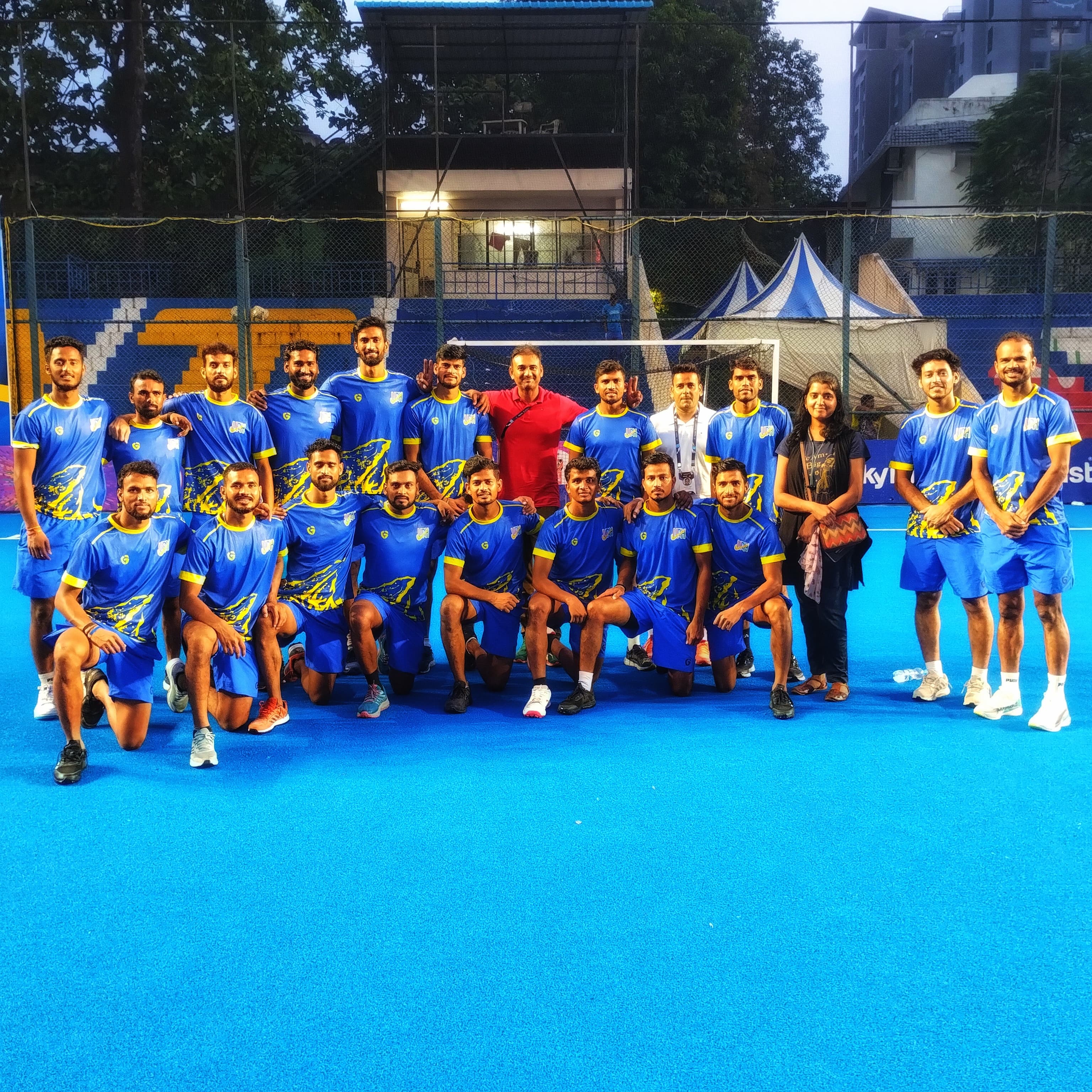
Beyond the matches themselves, Madhu shared a heartwarming personal experience that captured the camaraderie between players and fans. “The Uttar Pradesh team and their manager were so welcoming that when I requested a picture with the entire team after their bronze win and they brought me on the turf to make it happen. That moment was a beautiful reminder of the bond that hockey can create between players and their supporters,” Madhu recalled.
At the same time Madhu appreciated the high points of the tournament, she also offered thoughtful critique on its structure. “One-sided matches with huge goal differences tend to dilute the excitement as a fan—even when your favorite team is winning. A tiered system in the National Championships could help. Teams of similar levels competing more frequently would not only ensure tighter, more competitive games but also spare weaker teams from morale-crushing losses,” she observed.
Read more: Rani Rampal: The Sovereign of Indian Hockey, A True Amazon of Our Age
One thing was clear when Ravi Teja Mandapaka was talking to Madhu Raman. She brought a unique perspective on how Indian hockey can refine its appeal to fans. Thinking back on the recently concluded 14th Hockey India Senior Men National Championship, she shared insights on the tournament’s format of the championship and called room for improvement.
Suggesting a tiered system, she explained, “When teams at similar levels play against each other more frequently, it creates tighter, more competitive games. This not only keeps fans engaged but also spares weaker teams from morale-crushing losses.” Her proposal aims to foster a balanced competition while maintaining the tournament’s inclusivity.
Despite her critique of the format, Madhu was quick to commend the immense depth of talent on display. “The tournament showcased the full breadth of Indian hockey’s potential. Even in matches that seemed one-sided, there were standout moments of brilliance and skill that reminded everyone of the caliber of players we have,” she noted. This talent, she believes, is a cornerstone for building a stronger connection between the sport and its fans.
However, fan turnout remained a concern. “The players and staff were incredibly welcoming, engaging with fans at every opportunity, but it was disappointing to see the stands less than half-full, even during the knockout phase,” the lady observed.
She attributed this to a lack of on-ground publicity, emphasizing, “If the top players and Olympians in action had been highlighted better, perhaps more people would have come to watch. While the home team’s early exit may have affected attendance, stronger promotion could have made a difference.”
Read More: Hockey India League: Ushering a New Era, Honoring Dilip Tirkey’s Vision
Madhu also highlighted ways to create a more inclusive and welcoming atmosphere for female spectators. She praised the event’s safety and organization, noting that women—whether attending solo or with family—felt secure. However, she suggested several initiatives to further enhance female fan engagement:
- Featuring female officials and leaders in visible roles.
- Inviting prominent Indian women hockey players during knockout stages and celebrating their achievements.
- Organizing community outreach programs to connect local women’s hockey teams and schools with the sport.
- Adding pre-match and halftime activities appealing to all genders and age groups.
- Utilizing social media to announce top dignitaries and special guests, boosting publicity and visibility.
Madhu Raman believes that creating family-friendly venues is a vital step toward increasing attendance and nurturing a broader audience for Indian hockey. A short review on the facilities at the 14th Hockey India Senior Men National Championship, she emphasized the importance of catering to families and younger spectators.
“Facilities like clean and accessible restrooms, nursing and baby-changing areas, and even a dedicated kids’ play zone could make the experience more inviting for families,” Madhu explained. She also suggested incorporating interactive spaces, such as a fun zone where children could try their hand at hockey. “This would not only entertain the younger audience but also plant seeds of interest in the sport from an early age,” she added.
Madhu’s insights underscore the need for Indian hockey to focus on inclusivity and fan engagement. She pointed out that on-ground publicity plays a crucial role in drawing spectators. “Promotional events or banners in public spaces like parks and malls, highlighting the top players in action, could significantly improve awareness and footfall,” she said.
A conversation on her Chennai’s history of packed stadiums for international matches, Madhu is confident that the potential for a strong fan base exists. “The city has shown it can turn out in numbers when fans are aware of who is playing. If the top names at the National Championship had been publicized more effectively, the attendance would have been manifold,” she remarked.
Looking ahead, Madhu hopes to see Indian hockey evolve to invite and retain a diverse and engaged audience. By addressing family-oriented needs, leveraging grassroots-level publicity, and celebrating the stars of the sport, she believes hockey can continue to grow as a shared passion that brings people together across generations.
Read More: The utility of the Lone Centre Back in Field Hockey
Long story shortly put, Madhu Raman’s reflections on Indian hockey are one of many poignant reminders that the soul of any sport lies in its connection with its fans. Her vision for a more inclusive, family-friendly, and engaging experience underscores the transformative power of spectatorship—not just as passive observation, but as active participation.
Fans are the unseen architects of the sport’s legacy, their cheers amplifying every victory, their critique shaping the future, and their unwavering presence fueling the dreams of athletes.
As Indian hockey moves forward, Madhu Raman, I and my fellow hockey loyals strongly believe in the sport’s ability to inspire and unite.
It’s a call to action—for organizers to build bridges between the game and its supporters, for communities to embrace hockey as a shared joy, and for everyone to recognize that the future of the sport depends on empowering the very people who breathe life into it.
Follow Fieldvision on Youtube ,Twitter , Facebook Instagram and Whatsapp Channel for more updates.



Leave a Reply