
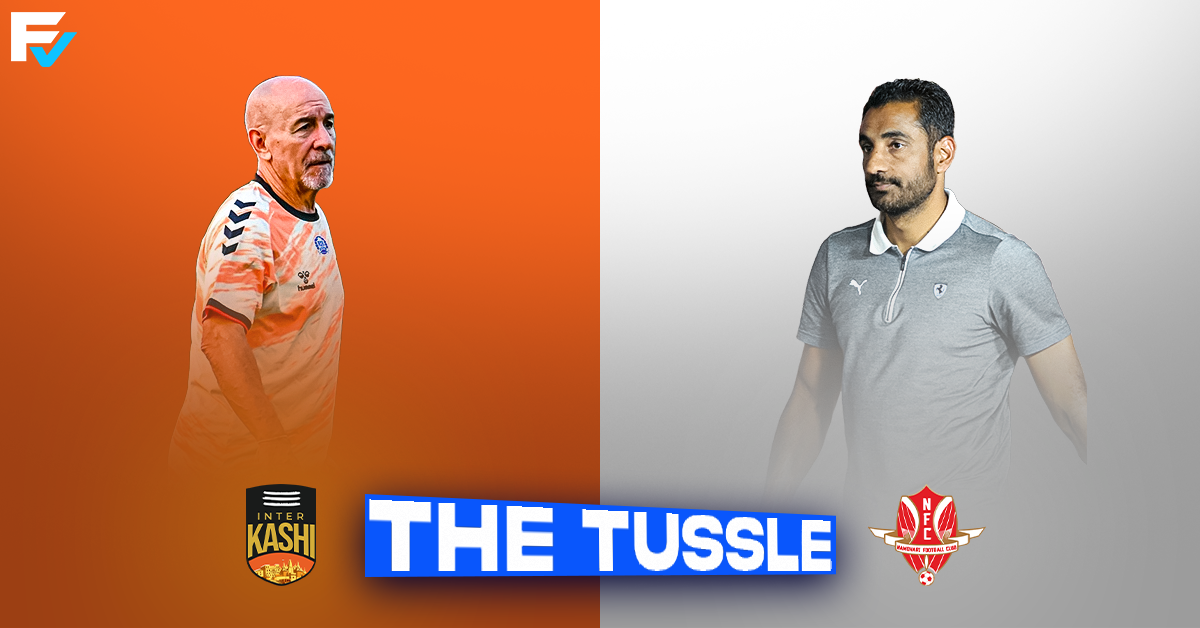

Indian Football has always been synonymous with chaos, mismanagement and controversy and its latest episode is the dispute between Namdhari FC and Inter Kashi FC. At stake? Not just a single match, but the entire title race.
As the season came to a close on February 7th, Churchill Brothers were provisionally declared champions, finishing with 40 points from 22 matches. Inter Kashi followed closely with 39 points. However, the result of one critical match, a 2-0 win for Namdhari over Inter Kashi on January 13 became the focal point of a legal battle, after allegations surfaced that Namdhari had fielded an ineligible player: Brazilian striker Cledson Da Silva.
The controversy centers on yellow card accumulation rules. According to I-League regulations, a player who receives four yellow cards must serve a one-match suspension. Cledson’s disciplinary record leading up to the January 13 match became the crux of the dispute.
The match in dispute and the series of events
The I-League rules dictate, a player who has received four yellow cards in the tournament shall be banned in the subsequent game. Cledson had accumulated three yellow cards before December 15, when Namdhari hosted Real Kashmir. During that game, he received a yellow card and, in a moment of frustration, pushed the referee earning a red card. According to league rules, when a red card follows a yellow in the same game, the yellow card is not counted toward suspension. Therefore, after serving his red card suspension and missing the December 20 fixture against Sporting Club Bengaluru, his yellow card tally still stood at three.
Cledson returned to the field on January 8 in their next game against Churchill Brothers and picked up another caution in the 78th minute marking his fourth yellow overall. Under the rules, he should have been suspended for the next game.
But when Namdhari played Inter Kashi on January 13, Cledson was included in the lineup. Namdhari argued that the AIFF’s internal portal did not show the ban, nor was it mentioned in the Match Commissioner’s meeting the day before.
Nonetheless, Inter Kashi lodged a formal protest with the AIFF Disciplinary Committee, claiming that the match should be forfeited in favour of the Varanasi side.
The Legal Battle
On February 24, the AIFF Disciplinary Committee sided with Inter Kashi, awarding them a 3-0 win. This ruling, if upheld, would hand Inter Kashi the title with 42 points. Namdhari challenged the verdict, and the AIFF Appeals Committee issued a stay on March 25 on the decision made by the disciplinary committee, deciding that the case warranted a full hearing.
Originally scheduled for April 28, a full three weeks after the completion of the League. The hearing was later advanced to April 12, however, Namdhari’s legal representative was unable to attend on the revised date due to an illness, meaning only Inter Kashi’s side of the argument was presented.
According to reports, there is no clarification whether or not Namdhari’s side of fresh arguments will be heard as the Appeals Committee has already heard Namdhari’s arguments earlier on 24th March.
Indian Football: The biggest loser
At this moment, the biggest loser in this situation is Indian Football. The said complications wouldn’t have arisen if the people inside the federation were swift enough to resolve the situation rather than complicate it further. The tardiness of the federation and the failure to address matters at the right time have affected Indian Football in the past, and this particular episode is not likely to be the last one.
Follow Fieldvision on Youtube ,Twitter , Facebook Instagram and Whatsapp Channel for more updates.


Leave a Reply