

As November draws its gauzy veil across Ipoh and the winds soft as memory begin their twilight wanderings through the Azlan Shah Stadium, one feels once more that a familiar quickening of the soul and a trembling has announced the arrival of the Sultan Azlan Shah Cup. This venerable tournament, now in its 43rd year (begun in 1983) returns like a well-loved epic whose pages we have thumbed until the margins bear our fingerprints. And in that return lies what Mikhail Bakhtin would call the chronotope of sporting time: a place where past and present, victory and heartbreak, collide in dialogic splendour.
For, the Cup is a conversation across generations: polyphonic, unruly, and tender.
It lives in the voices of spectators, in the breathless urgency of players who run as if pursued by fate, in the quiet authority of old scribes like myself, and in the murmuring Ipoh wind that has borne witness to it all. As Harold Bloom once said of literature, so too might we say of this: “We read because we cannot know ourselves otherwise.”
In like manner, we return to Ipoh because the sport cannot know itself without this annual pilgrimage. And so, standing upon the threshold of the 2025 edition, one senses that this year bears its own distinct aroma: sweet as jaggery, sharp as brass, and touched with that peculiar melancholy found in the last rays of a Malaysian evening.
Yet, even as that twilight settles over the Azlan Shah Stadium, its stillness is only a prelude, and an inhalation before the world gathers once more at centre stage. For, with the fading light comes the stir of nations, the rustle of colours, and the quiet tightening of resolve.
Beginning November 23rd, six nations converge with each carrying its own burdens, and each burning with bright hope. This is no ordinary contest, but a gathering of archetypes almost Shakespearean in its cast. They say, at the Folger Shakespeare Library, one often hears that true drama lies in presence, and presence radiates from these teams with palpable force. They enter as players upon a stage ready to shape the narrative through the gravity of their being.

- Belgium, the colossus of modern hockey, strides in after long absence. Their return after 2008 feels like the re-entry of a banished nobleman whose exile has sharpened both skill and hunger. They come, methinks, not simply to compete but to seize dominion.
- New Zealand, the wind-borne power of Oceania. Their strokes have the elegance of a waka slicing through ancestral waters, and twice they have lifted the Cup (2012, 2015). The Black Sticks seldom arrive without stirring the air like approaching monsoon clouds.
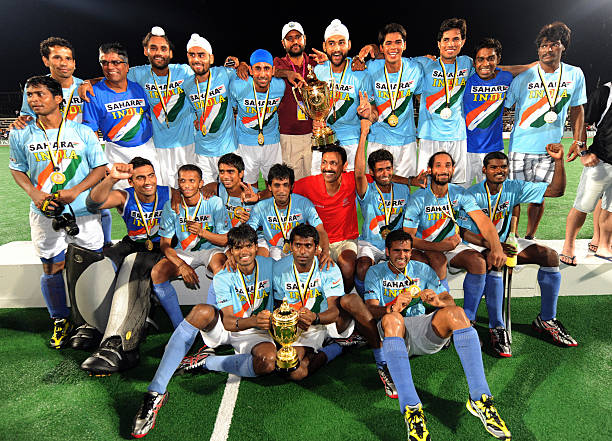
- India, O My India, richer than most in memory, myth, and longing. Five-time champions (1985, 1991, 1995, 2009, 2010) and wandering trophyless since 2010. India approaches this Cup as one approach an estranged childhood friend: with affection, with apprehension, and with a hope that borders on prayer. They come in youthful bursts and seasoned sighs, and perhaps seek a renewal of identity what Nietzsche might call a transvaluation of past defeats into future fire.
- Malaysia, the hosts, the custodians, the eternal heart of this tournament ranked high with their unwavering in spirit. Their 2022 win in the final vs South Korea still glimmers in the collective memory like a heirloom brooch polished anew for festival days. They step forth with the pride of a people who have kept the flame burning since 1983, embodied Bakhtin’s idea that culture survives through continuous carnival, and what is Ipoh if not a hockey carnival of the soul?
- Ireland and Canada complete the sextet, earnest of heart and rich in resolve. They arrive like the young princes of a Shakespearean subplot: unexpected, hopeful, and capable of stealing the scene with a single inspired act.
Together, they create a rich and colorful picture so full of life it feels like everything is ready: the stage set, the cast complete, and the story about to begin. But even the most complete picture has small missing threads that, while not weakening the whole, still change how it feels. And hence, the absence of defending champions Japan hangs lightly on the air like a missing note in an otherwise complete melody. The reasons, as is customary in invitational tournaments, remain discreetly veiled. Yet the absence leaves a quiet ache and a lingering melancholy
One is reminded of Harold Bloom’s “anxiety of influence”; here, perhaps, it is the anxiety of participation. With Japan missing, a subtle echo fades. And still, as in sport, as in Shakespeare, the show must go on even when a familiar voice no longer sings in the chorus.
And so, the curtain rises perhaps with one voice missing, but with the stage still sacred and the story still worth telling. For what draws these nations back, year after year, is not just competition, but something more enduring.
A Tournament That Defies Time’s Erosion?

The Sultan Azlan Shah Cup is neither Olympics nor World Cup nor Champions Trophy, yet, its enchantment endures like an old myth retold by firelight. Since 1983, it has marched on, at first biennially, and then annually like a tale that refuses to be silenced. And Since 2007, the Azlan Shah Stadium itself has become its home, its guardian, and its sacred geography. To speak of this Cup is to speak of Malaysia’s devotion almost devotional in its constancy. If Europe has its cathedrals, then Asian hockey has Ipoh; and the tournament is its annual mass, where believers gather to witness the unfolding drama.
And what of India and Pakistan you ask? My editors reminded me that this is an editorial, and not an epic. I apologize for this time dearest readers. But even within the bounds of editorial brevity, some stories insist on being felt. The turf itself remembers.
As one gazes upon the stadium’s turf, one can almost hear whispers of older battles: Australia’s ten titles, India’s five, Pakistan’s three, and Korea’s three. Those were days of raw muscle and instinct when victory often arose from courage rather than meticulous calculation.
Modern hockey moves with the speed of electricity and the precision of poetry. It’s a game transformed faster, sharper, and more tactical. Yet, for those of us who came of age in the off-side era, memory clings stubbornly to the present, like ivy on old stone. Scholars at the Folger Shakespeare Library often say that every performance carries echoes of the past. The Sultan Azlan Shah Cup is no different. Every sprint recalls a burst from 1994. Every penalty corner reverberates with the tension of 2003. The game may have evolved, but its ghosts still run alongside.
Fixtures That Promise Fire and Thunder? This year’s fixtures murmur of impending storms:
- India vs South Korea — a rivalry older than many of the players themselves.
- Malaysia vs New Zealand — a duel sure to rouse Ipoh to its feet.
- Belgium vs India — European precision against Asian improvisation.
- Malaysia vs Belgium — David against Goliath, yet Ipoh has witnessed stranger upsets.
- India vs New Zealand — a philosophical contest: rhythm vs tempo, art vs architecture.
Each match could tilt the narrative, topple expectations, or forge unexpected heroes—what Nietzsche might call the birth of new idols from the furnace of trial.
Beneath the scores and schedules, the Azlan Shah Cup reflects Asia’s ongoing tussle with European dominance, highlights flashes of brilliance that defy tactical logic, and reveals character in moments where numbers fall short.
- For India, it is a search for poetic fire.
- For Malaysia, an invocation of homegrown thunder.
- For Belgium and New Zealand, a proving ground.
- For Canada and Ireland, an unexpected stage upon which youthful ambitions may dance.
Now then, a personal note, and permit me, dear reader for a brief indulgence.
I’ve never set foot in Ipoh and Malaysia. Probably, may never will. But through the Sultan Azlan Shah Cup, I’ve travelled through memory, rivalry, and the rhythm of the game. As a die-hard Indian hockey fan and a columnist, Ipoh has become a place I know by heart, if not by passport.
Its turf speaks to me. Its evenings linger in my imagination. And when the Cup begins on 23rd November, I am there in spirit, in story, and in every echo of a stick meeting ball.
Tournaments may come and go. Institutions may age. The world may surge ahead with its analytics and algorithms. But hockey, my beloved field hockey like love, knows no borders. It endures. So does, Sultan Azlan Shah.
As does my belief in the magic it brings.
Follow Fieldvision on Youtube ,Twitter , Facebook Instagram and Whatsapp Channel for more updates.


Leave a Reply