
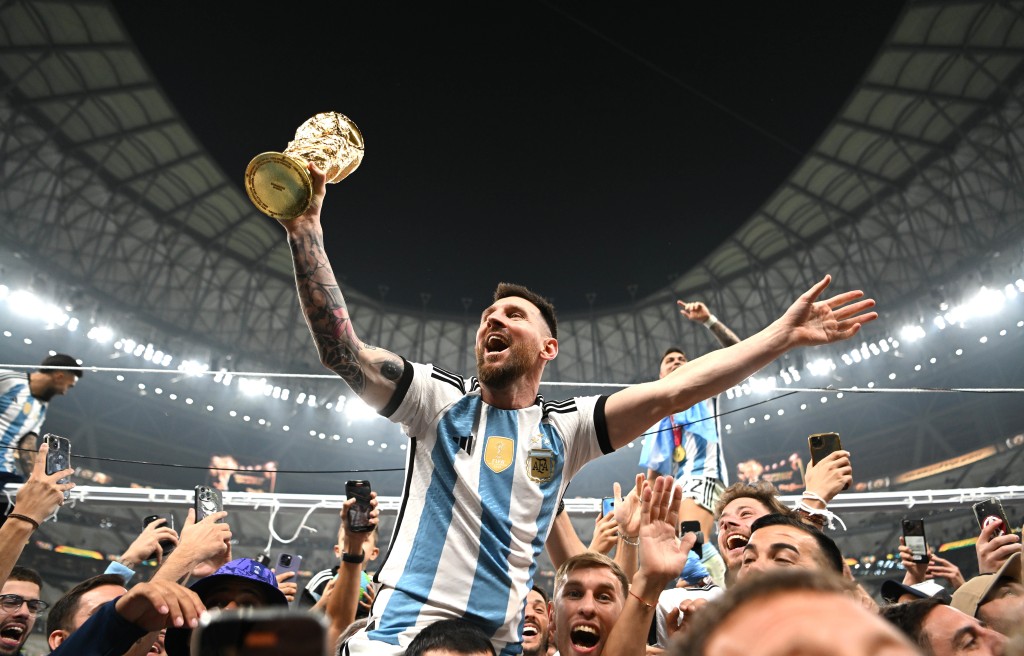
The wait is finally over. Today marks the beginning of the greatest spectacle on Earth, a month-long carnival that the entire world anticipates every four years. For football fans, there is no greater pride than seeing their favorite stars represent their nations on the grandest stage. However, the 2026 edition is set to break all previous records and traditions.
For the first time in its illustrious 100-year history, the FIFA World Cup is being co-hosted by three nations simultaneously—the USA, Mexico, and Canada. This joint venture is just the beginning of what makes this tournament unique. Let’s dive into why this World Cup is starting with a fresh identity and renewed energy.
The Expansion: A Historic Shift in Format
We are witnessing the dawn of a new era in international football. For decades, fans have been accustomed to the 32-team battle for glory. But in a historic first, the 2026 World Cup features 48 nations, opening the door for more countries, more stories, and more drama than ever before. This expansion not only changes the scale of the tournament but also ensures that the “beautiful game” truly reaches every corner of the globe.

A Global Blueprint: Continental Breakdown and the New Tournament Format
The inclusion of 48 teams has reshaped the footballing map, allowing representation from every corner of the globe. The continental slots for this historic tournament are distributed as follows:
- Europe (UEFA): 16 teams (the highest representation)
- Africa (CAF): 9 teams
- Asia (AFC): 8 teams
- South America (CONMEBOL): 6 teams
- North, Central America & Caribbean (CONCACAF): 6 teams (including the three host nations: USA, Mexico, and Canada)
- Oceania (OFC): 1 team
- Intercontinental Playoffs: The final 2 spots were secured by teams navigating through the grueling intercontinental playoffs.
The 39-Day Marathon: How the Group and Knockout Stages Will Work
In the first round, the 48 teams will be divided into 12 groups of 4 teams each, competing in a round-robin format of three games. To keep the home passion alive, the three host nations will play all their group-stage matches in their respective home countries.
The road to glory has also become longer. The top two teams from each group (24 total) will automatically advance. Joining them will be the top eight third-place teams (determined by points, goal differential, and other tie-breaking criteria). This brings a total of 32 teams into a massive knockout round. Because of this expanded field, the 2026 World Cup will last for an exhausting 39 days, compared to the roughly 32-day duration of previous editions.
Game-Changers: New Rules to Revolutionize the Sport
To enhance the tempo, fairness, and discipline of the game, several groundbreaking rules are being introduced in this tournament. Here is a breakdown of the new regulations that will make the action even more gripping:
1. Faster Throw-ins and Goal Kicks
To eliminate time-wasting, referees now have the authority to initiate a five-second countdown via an on-field signal after the ball goes out of play. If the player fails to resume play before the countdown ends, the throw-in or corner kick will be awarded to the opposing team.
2. Quicker Substitutions
Slowing down the game during a tactical switch is now a thing of the past. A substituted player must exit the pitch within 10 seconds of the signal. Failure to do so means the incoming replacement must wait until the next stoppage after at least one minute of active play has passed.
3. Mandatory Medical Assessment Absences
If a player receives medical treatment on the field that causes a stoppage, they must leave the field for at least one minute after play resumes. This rule will discourage players from faking injuries to kill time. However, this does not apply if the injury was caused by a foul resulting in a card, or if the goalkeeper is hurt.
4. Expanded Role for VAR
The Video Assistant Referee’s (VAR) jurisdiction has been expanded. VAR will now review clear errors regarding a second yellow card (leading to a red), cases of mistaken identity during penalties, and disputed corner kick decisions, provided the review does not cause unnecessary delays.
5. Double Yellow Card Amnesty
Accumulating two yellow cards across separate matches still triggers an immediate one-match ban. However, due to the increased number of games, the yellow card count will now be reset at the end of the group stage as well as after the quarter-finals. This minimizes the risk of players missing the historic final due to minor infractions.
6. Brand New Red Card Offenses
In a strict move to combat toxicity, referees can now flash a straight red card to players who cover their mouths while confronting opponents or officials, preventing the concealment of racist or abusive language. Red cards will also be shown to players who walk off the pitch to protest refereeing decisions (and team officials who encourage it). Furthermore, any team causing a match to be abandoned prematurely will automatically forfeit the game.

The Dreamers’ Debut: Four Nations Set for a Historic World Cup Bow
The expanded 48-team format has done more than just increase the match count; it has opened the floodgates of dreams for football’s traditional underdogs. The grandest stage of the sport is set to welcome four debutant nations, each bringing their own incredible stories of grit, passion, and history-making campaigns.
1. Curaçao: The Ultimate Giant-Killers
With a population of just 156,000, Curaçao has pulled off the unthinkable. They will make their historic World Cup debut as the smallest nation to ever qualify for the tournament, breaking the previous record set by Iceland during the 2018 edition in Russia. Their presence in North America is a testament to the fact that in football, heart matters more than numbers.
2. Cape Verde: The Island Dream
Another small island nation making its premiere showing on the global stage is Cape Verde. Home to about 500,000 people, this spirited squad has defied all odds to become the third-smallest country ever to grace a FIFA World Cup. Expect them to bring the vibrant rhythm of the Atlantic to the pitches of North America.
3. Jordan: The Royal Ascent
Jordan’s recent tactical brilliance and footballing evolution have culminated in their maiden World Cup qualification. Their historic run has united an entire nation, so much so that their Moroccan-born head coach, Jamal Sellami, was granted Jordanian citizenship by King Abdullah II himself as a token of appreciation for elevating the country to global footballing heights.
4. Uzbekistan: Guided by World Cup Royalty
The final debutant on the list is Uzbekistan, and while the team might lack tournament experience, their dugout certainly does not. The Central Asian side is led by head coach Fabio Cannavaro—a man who has been to four World Cups as a player and famously captained Italy to world glory in 2006. Cannavaro’s elite championship mentality could make Uzbekistan the ultimate dark horse of the tournament.
A Nostalgic Curtain-Raiser: Mexico and South Africa Reignite an Old Rivalry
The honor of kicking off this 48-team mega-event belongs to co-hosts Mexico, who will square off against South Africa in tonight’s highly anticipated opening clash. Interestingly, this is not the first time these two football-loving nations have had the privilege of curtain-raising a World Cup.
Football purists and fans will fondly remember the 2010 FIFA World Cup, where Mexico and South Africa also faced each other in the opening match, producing a thrilling 1-1 draw highlighted by Siphiwe Tshabalala’s iconic goal. Reigniting this classic encounter adds a heavy dose of nostalgia to day one, making tonight’s clash deeply sentimental for fans worldwide.
Now, the countdown is down to just a matter of hours. The stage is set, the tension is palpable, and very soon, the whistle will blow to unleash the greatest football carnival on Earth.
Follow Fieldvision on Youtube ,Twitter , Facebook Instagram and Whatsapp Channel for more updates.


Leave a Reply