
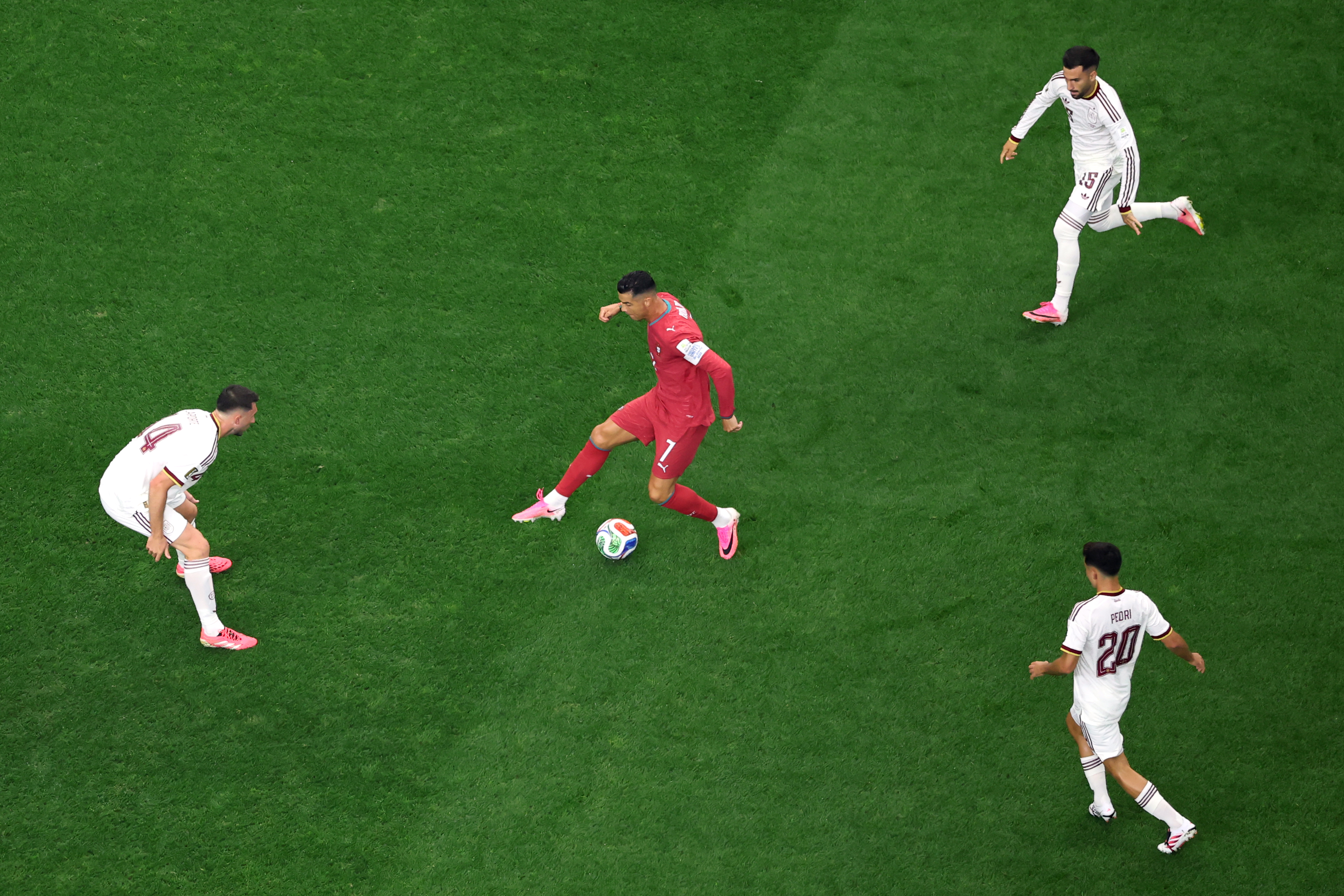
There is a brutal, unforgiving honesty to football. It does not care for sentimentality, nor does it bow to past glories. As the final whistle echoed through the Dallas Stadium, sealing Portugal’s 1-0 defeat to Spain in the Round of 16, the cameras naturally found one man.
Cristiano Ronaldo stood with hands on hips, staring blankly into the middle distance, desperately holding back the tears. At 41, this was almost certainly his final World Cup game. But there would be no fairytale ending. No final piece of silver to complete the grandest trophy cabinet in football history. Instead, there was only the quiet, crushing realization that an era had ended—not with a bang, but with a agonizing whimper.

A Golden Generation Falling on Deaf Ears
On paper, this Portugal squad was a masterpiece. From the defensive steel of Ruben Dias to the creative engineering of Bruno Fernandes and Vitinha, Roberto Martinez possessed a roster capable of tearing any nation to pieces. Yet, throughout this 2026 campaign, they looked less like a team and more like a collection of individuals trapped in an existential crisis.
They failed to gel. The fluid, high-pressing football that should have defined this hyper-talented generation was discarded for a rigid, predictable system designed entirely to serve a static focal point. Portugal played as if they owed a historical debt to their captain, and in doing so, they bankrupt their own potential.
The disconnect between Ronaldo and the younger superstars was painful to watch. Bruno Fernandes, usually a maestro of space and tempo, repeatedly looked stifled, forcing passes into congested areas trying to find a national icon who no longer possessed the explosive burst to reach them. The synchronicity was entirely absent.

The Burden of a Legend
The uncomfortable truth that Portugal must now confront is that in this tournament, Cristiano Ronaldo was a burden rather than an asset.
While Spain’s vibrant youth system flourished through dynamic movement, Portugal’s attack felt locked in slow motion. The most damning casualty of this tactical stubbornness sat on the bench. Goncalo Ramos, a dynamic forward who represents the energetic future of Portuguese football, was left warming the bench, his mobility and tireless pressing sacrificed just to keep an ageing monument on the pitch.
When you demand to be the centerpiece, you must deliver the moments that justify the real estate. Ronaldo could not. The modern game requires numerical fluidity, defensive tracking, and relentless sharpness—attributes that time has inevitably stripped from the maestro.
For all his legendary status, a harrowing statistic exposes Ronaldo’s historic struggle when the stakes are highest on this specific stage: across six tournaments, Cristiano Ronaldo has scored just one single World Cup knockout goal in his entire career, and that too came from the penalty spot. When Spain tightened the screws, he could not find the escape hatch.

The Cost of Ego
Every great champion possesses an ego; it is the fuel that drives them to break records and conquer continents. But there is a fine line between defiance and delusion.
Ronaldo should have stepped aside sooner. His refusal to accept a diminished role—or to let the “young guns” inherit the kingdom—handcuffed this team. His declining sharpness was painfully evident in Texas, a ghost of the player who once terrorized defenses with a single glance. Compounding the tragedy were the familiar off-pitch noises: the subtle social media sideshows, the defensive statements from his camp, and an atmospheric ego that demanded the national team revolve around his personal sunset.
By demanding the spotlight, he obscured the very players who were meant to carry the torch.

An Eternal Legacy, a Flawed Finale
It is unfair to let the curtain call erase the play. Cristiano Ronaldo’s achievements for his country remain monumental, forever etched into the bedrock of international football:
- Euro 2016 Champions: Delivering Portugal’s first-ever major international trophy against all odds.
- 2x UEFA Nations League Winner: Cementing an era of European dominance.
- All-Time International Top Scorer: A record that may stand for generations.
He transformed Portugal from occasional dark horses into permanent royalty. He gave his country belief.
But greatness lies not just in knowing how to build an empire, but in knowing when to leave it to your successors. As Mikel Merino’s 91st-minute strike hit the back of the net, it signaled a double death: the end of Portugal’s World Cup dream, and the final, tragic confirmation that a legend had overstayed his welcome. Ronaldo leaves the World Cup stage not as the savior, but as a poignant reminder that even the gods of the game cannot outrun time.
Follow Fieldvision on Youtube ,Twitter , Facebook Instagram and Whatsapp Channel for more updates.

Leave a Reply