
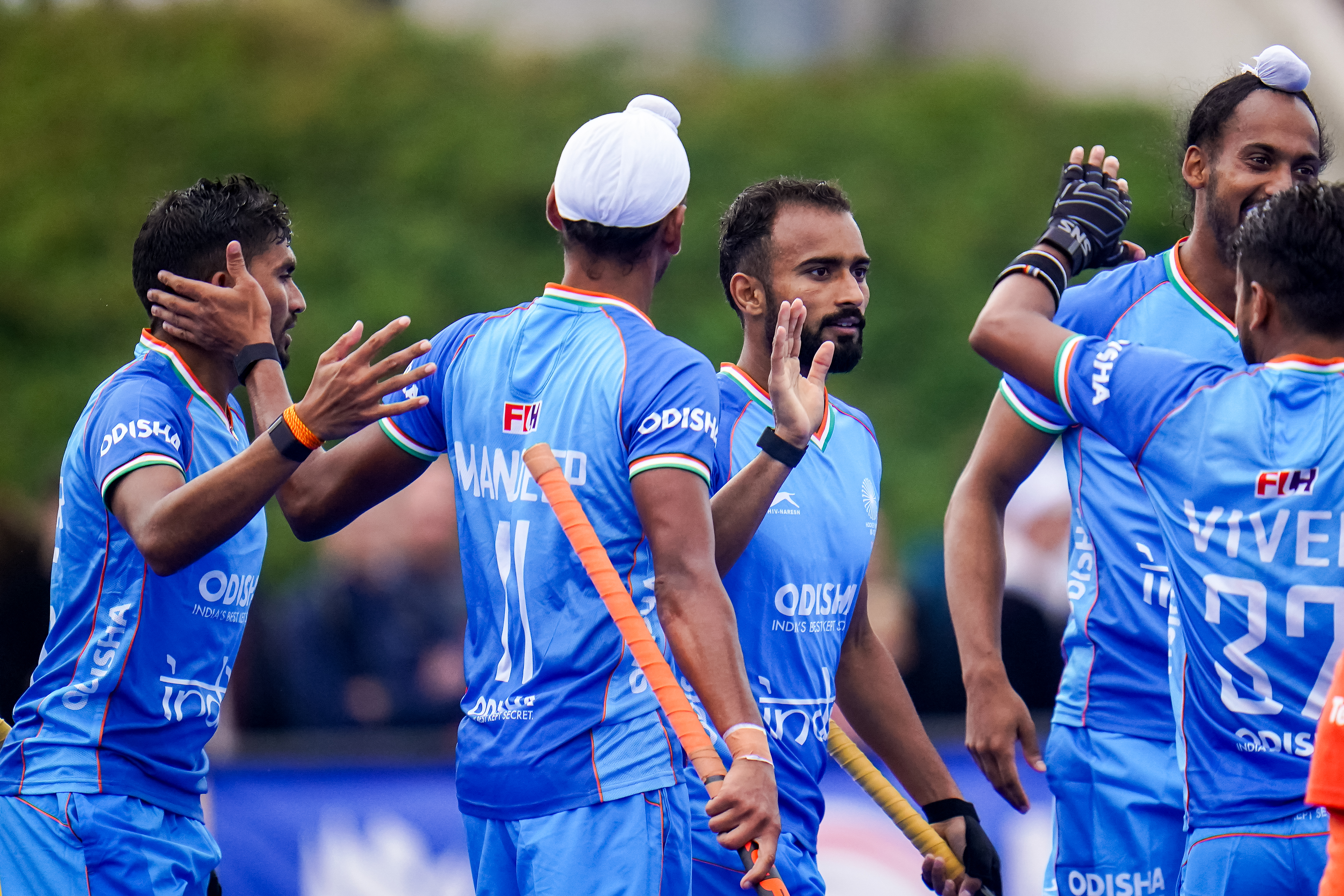

There are few rivalries in sports that carry the weight of history, pride, and symbolism like the one between India and Germany in hockey. And, when India takes on Germany in India’s National Stadium, it harks back to an era where national pride was interwoven with sport where legends were born under the shadows of grand political and cultural shifts.
The Echoes of Hitler and Berlin 1936
Whenever we talk about India and Germany, we should, for an hour or two, revisit 15 th August, 1936 in Berlin. India’s field hockey god Dhyan Chand led India to a historic 8-1 victory over Germany in the final. In that match, the field became a symbolic battleground between Hitler’s aspirations for Aryan supremacy and India’s burgeoning fight for self-respect under colonial rule.
Hitler himself watched helplessly as Dhyan Chand’s India sheered brilliance and turned the tide. As legend has it, after the game, Hitler offered Dhyan Chand a military position in the German Army, which he respectfully declined. This was not merely a rejection of a tempting offer; it was a statement of pride and a refusal to let personal gain compromise his national identity.

A Return to Dhyan Chand’s Home
Now, almost a century later, the Indo-German hockey rivalry is set to rekindle. This time, in the very stadium that is named after the man who once silenced Berlin. The Major Dhyan Chand National Stadium will roar to life again when it hosts international hockey after years of lying dormant.
The last international match here was held in 2015, and the venue has since been hibernated by the rise of Odisha as India’s new hockey capital. But, like a phoenix rising from the ashes, the stadium now stands ready to be the theater of another monumental clash as India and Germany—both titans of world hockey—prepare to face off once more.
This time, the stakes are different but no less important. For Indian fans, this series is more than preparation; it is a revival of their deep emotional connection to the game and a reawakening of national pride that was ignited by that victory in Tokyo 2020, where India claimed a long- awaited bronze medal by defeating none other than Germany 5-4 in a heart-stopping contest.
However, the narrative took a different turn at the 2024 Paris Olympics as Germany exacted their revenge by edging India out with a narrow 3-2 victory in the semifinals and thus, denying India a place in the final. This upcoming series, then, is not just about rekindling the rivalry but about redemption, as India looks to restore their pride and momentum on the road to future Olympic glory.
The Importance of a Bilateral Series in the Olympic Cycle
From a coach and technical perspective, a bilateral series during the Olympic cycle serves as a crucial component in preparing a team for international competition. These matches go beyond mere scores and provide invaluable opportunities for assessing team dynamics, individual player performance, and tactical execution under pressure.
Coaches will have more freedom than ever and can evaluate their game plans against formidable opponents by making real-time adjustments that enhance the team’s overall strategy. This adaptive process is critical for developing a team that can effectively respond to the diverse playing styles encountered in Olympic-level competition.
Additionally, a bilateral series is instrumental in psychological preparation as these series foster team cohesion, which, I firmly believe, is vital for success in high-stakes environments.
As players face challenges together, they learn to trust one another and develop a collective understanding of each other’s strengths and weaknesses. This helps player build mental resilience and confidence that will allow them to compete for podiums at the Asiads, World Cups and the Olympics.
Coaches play a pivotal role in facilitating team-building activities that enhance relationships both on and off the field. The series also allows coaches to evaluate player performance in different positions and adjust tactics accordingly. This approach ensures that each player is utilized effectively, while also providing opportunities for emerging talent to contribute to the squad.

Evolution of Technical Styles
Technically speaking, the styles of both India and Germany in hockey have undergone a metamorphosis evolving from the lush, verdant fields of their traditional grass roots to the sleek, modern expanse of artificial turf. This mirrors a broader shift in gameplay, training methodologies, and player development.
Indian hockey, once a vibrant tapestry woven with skillful stickwork and quick dribbling, flourished on grass with natural agility of its players like a river flowing gracefully through a landscape. Legends like Dhyan Chand painted dazzling strokes of individual brilliance on this canvas. However, as the game transitioned to the quicker tempo of artificial turf in the late 20th century, the dynamics shifted like the changing tides.
Turf demands a relentless pace and compels teams to adopt more structured formations, swift passing, and strategic positioning. India’s style began to blend elements of speed and precision, evolving into a disciplined rhythm while still preserving the rich melody of creativity and flair that defines its heritage.
In contrast, Germany’s journey through hockey has unfolded like a well-crafted symphony marked by a methodical approach to training and tactics. The shift from grass to turf saw the emergence of a focus on fitness, teamwork, and strategic play akin to a conductor guiding an orchestra to harmony.
German hockey is characterized by its structured defensive formations and rigorous training regimens that emphasize the collective over the individual—a philosophy that prioritizes unity over solitary brilliance.
This evolution has enabled Germany to shine brightly on the international stage where they utilize their physical fitness and tactical acumen to orchestrate victories. The fusion of technical expertise with a robust mental framework has established Germany as a formidable force capable of adapting their game to dance with various styles of play.

Key Players to Watch
As the series approaches, fans can expect standout performances from some of the world’s top hockey talent. For India, captain Harmanpreet Singh remains pivotal with his exceptional drag- flicking ability having scored over 150 international goals.
His leadership will be supported by the rising star Abhishek known for his electrifying speed and forward press, and the experienced Manpreet Singh who anchors the midfield with tactical vision and precision.
For Germany, forward Christopher Rühr—renowned for his lethal finishing—alongside defender Mats Grambusch, offers a potent combination of attack and defense. Both players were instrumental in Germany’s success at the 2024 Paris Olympics. Goalkeeper Alexander Stadler will also be key in safeguarding the net, having consistently performed under high-pressure situations.
Germany’s Pride and Literary Heritage
On the other side, Germany too comes to the field with its own weight of history and pride. The Germany of today is not the same as the one under Hitler’s shadow.
It has evolved into a nation that places immense value on unity, perseverance, and moral integrity – qualities that are reflected both in its hockey team and its literature.
Writers like Johann Wolfgang von Goethe and Friedrich Schiller have long espoused the virtues of the human spirit, resilience in the face of adversity, and the pursuit of excellence.
Schiller’s Ode to Joy, famously incorporated into Beethoven’s Ninth Symphony, celebrates the brotherhood of man – a vision far removed from the divisive ideologies of the past. This notion of striving together for greatness is something Germany’s hockey team embodies today as they continue to be one of the most formidable sides in world hockey.
A History With Numbers
The India-Germany rivalry in men’s hockey is rich with history. Since their first meeting in Munich in 1932 where India triumphed 6-0, the two teams have clashed more than 100 times.
Germany has held the upper hand by winning more than 50 of those encounters compared to India’s 26 victories, while 27 matches ending in a draw. India’s biggest win—a legendary 8-1 victory—came during the 1936 Berlin Olympics, while Germany’s most dominant performance was a 7-1 win at the 1976 Montreal Olympics.
Despite India’s prowess, Germany has outscored them 236 to 183 goals overall which showcases the structured precision of their playing style. India’s flair and creativity shine through in their speed and ability to exploit counterattacks, but Germany’s disciplined, possession-based approach often dictates the tempo of their matches.
Germany’s recent Olympic campaigns, especially their narrow victory over India in the semifinals of the Paris 2024 qualifiers show a team that knows how to channel this historical resilience. Like their literary heroes, the German hockey team displays a discipline, fortitude, and tactical intelligence that has been honed over decades.
The upcoming series will be another chapter in this story of perseverance – a new test of how Germany faces its own legacy on Indian soil, where Dhyan Chand once triumphed.
The Emotions of Indian Fans
Regardless of whether you call Tuticorin or Roorkee home, or whether you come from Dimapur or Surat, the truth remains: when I speak of India’s national game in India’s national capital and India’s national stadium, the emotions soar to new heights, don’t they?
In Indian literature, the theme of cyclical triumph and resurgence is deeply embedded. From the Ramayana where Lord Rama returns from exile to reclaim his rightful place, to the works of Sarojini Naidu and Mahatma Gandhi, which speak of hope and renewal, Indian writing has always celebrated the idea that no matter how long the struggle, victory—both moral and physical—can be achieved.
For Indian hockey fans, the upcoming India-Germany series is a rekindling of a flame that has never truly dimmed. This is the spirit that Indian fans will carry with them as they fill the stands at the Major Dhyan Chand Stadium – their hopes intertwined with the players on the field.
The rivalry between these two hockey giants is etched in the collective consciousness of Indian fans not just because of the results, but because of the emotional highs and lows they have endured.
A Legacy Renewed
On a personal note, even for some like me who is at least 1900 km south of the national capital, The return of international hockey to New Delhi after a decade remains no small feat.
The India- Germany series, coming after their last bilateral meeting on Indian soil in 2001, is not just a continuation of a historic rivalry—it’s a celebration of the revival of Indian hockey.
As both teams take to the field in this Olympic cycle, remember one thing.
The anticipation is palpable. The emotions are raw, the atmosphere will be charged, and the echoes of past triumphs and heartaches will resonate with every pass, every save, and every shot on goal. For Indian fans, this series is not just about two matches—it’s about pride, passion, and the undying love for a sport that has always held a special place


Leave a Reply