
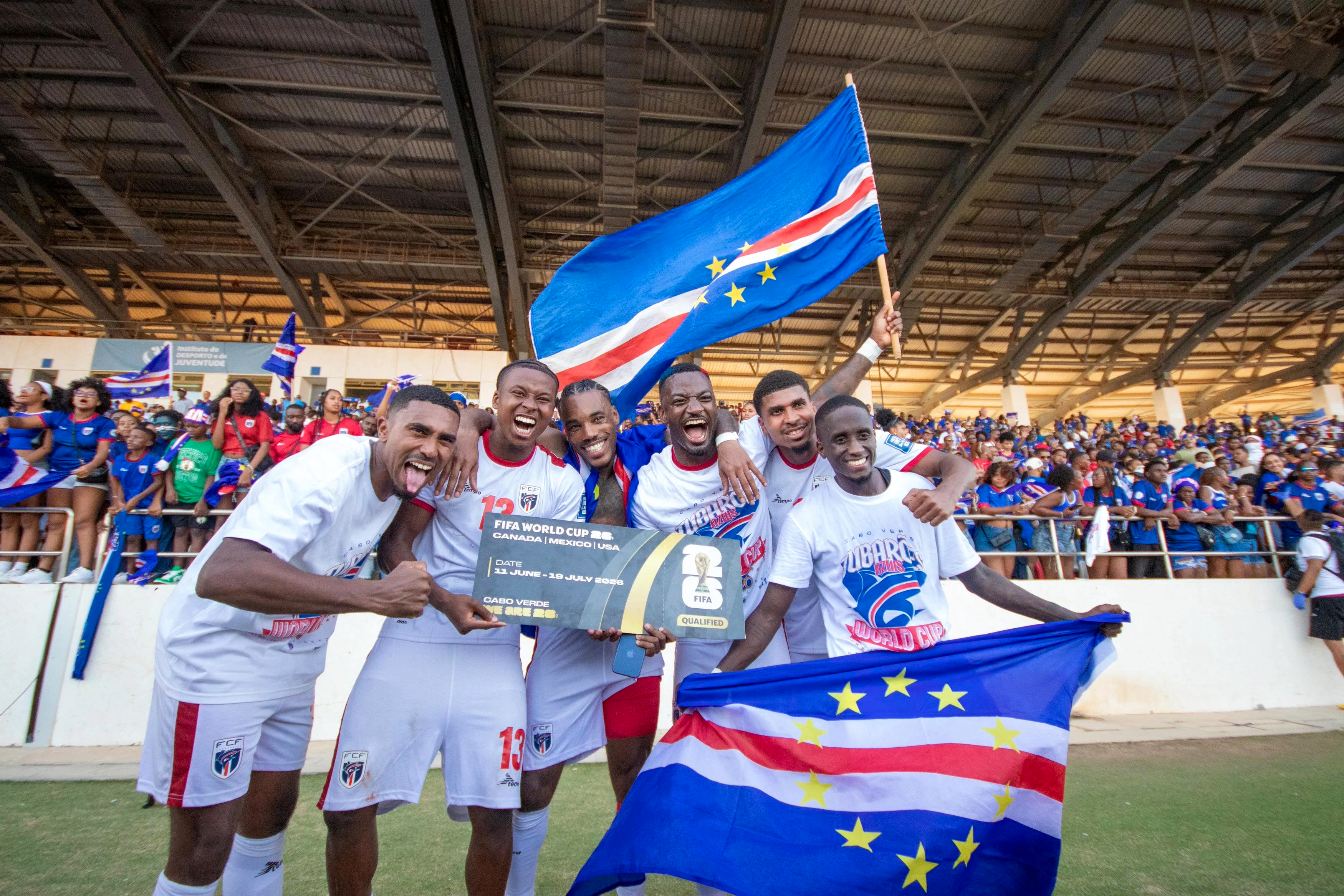
If there is a lingering complaint that expanding the FIFA World Cup to 48 teams would somehow dilute the magic of the tournament, someone forgot to send the memo to the island nation of Cabo Verde.
On Monday, inside a roaring Atlanta Stadium, the tiny West African archipelago—boasting a population of just over 500,000 people—pulled off one of the most stunning results in modern World Cup history. Making their debut on football’s grandest stage, the Blue Sharks stood toe-to-toe with European heavyweight and tournament favorites Spain, grinding out an extraordinary 0-0 draw in their Group H opener.
When the final whistle blew, it didn’t matter that the scoreboard read zeros. The emotional scenes on the pitch felt like a coronation.

A Wall Sown in Resilience
Spain entered the match as a terrifying juggernaut, priced by bookmakers at a staggering -1200 to walk away with an easy three points. Armed with a masterclass midfield featuring Rodri and Pedri, and a terrifyingly sharp attacking vanguard, Luis de la Fuente’s men were expected to dictate terms from the opening minute. They did precisely that, suffocating Cabo Verde with their trademark luxury of possession.
But possession is hollow without a clinical edge, and whenever Spain found a crack in the system, they ran into a 40-year-old brick wall named Vozinha.
The veteran Cabo Verdean goalkeeper turned back the clock to put on a career-defining performance. In the dying embers of the first half, when Spain threatened to break the deadlock, Vozinha pulled off a sequence of sprawling, desperate saves to deny Ferran Torres and Aymeric Laporte. Even when Torres managed to beat him, the football gods intervened as the ball rattled violently off the crossbar.
Not even the introduction of Spain’s generational teenager, Lamine Yamal, could pick the lock in the second half. The dynamic winger brought an air of unpredictability to the pitch, but the Blue Sharks’ backline, spearheaded by Logan Costa and Steven Moreira, marshalled him with flawless defensive discipline. It was the continuation of an identity forged in qualifiers, where Cabo Verde choked out opponents with seven clean sheets in ten matches.

What it Means for Cabo Verde
To understand the weight of this draw, one only needed to look at Vozinha at full-time. The veteran goalkeeper fell to his knees, utterly consumed by tears, engulfed by teammates who knew they had just accomplished the impossible.
“This means everything for our country,” an emotional Cabo Verde coach Pedro Leitão Brito said after the match. “We have always said that we wanted everybody to see our country, our team. We have shown organization and braveness, and this is proof of what our country is about—resilience and trying to overcome hardships.”
For a nation whose entire population could comfortably fit inside a few World Cup stadiums, this single point is a declaration of presence. It is a testament to a diaspora and a localised football program that has quietly built a competitive, fiercely proud unit over the last decade. For the people of Cabo Verde, this 0-0 result is an indelible cultural milestone that will be spoken of for generations.

A Statement to the Footballing Fraternity
Beyond the immediate borders of the African continent, Cabo Verde’s heroism serves a broader, highly romantic purpose for the footballing fraternity. It serves as a defiant rebuttal to critics of the 48-team format.
When FIFA announced the expansion, traditionalists feared the group stages would be littered with lopsided, unwatchable blowouts. Instead, the first week of the 2026 World Cup has proven that the gap in global football is shrinking. Smaller nations are no longer arriving just to collect jerseys and take photos; they are coming equipped with tactical sophistication, elite athleticism, and an unshakeable belief.
Cabo Verde didn’t luck their way into a draw; they earned it through meticulously organised low blocks, perfectly timed tactical fouls, and a collective work ethic that completely disrupted Spain’s rhythm.
Luis de la Fuente admitted his side lacked “freshness and a clinical edge,” but to blame Spain’s shortcomings would be a disservice to the Blue Sharks. Cabo Verde took the best punches the European champions could throw and refused to fall. Group H is now wide open, and while games against Uruguay and Saudi Arabia loom, Cabo Verde has already won the hearts of neutrals worldwide.
The beautiful game has always belonged to the dreamers. And on a historic night in Atlanta, Cabo Verde proved that dreams don’t care about FIFA rankings.
Follow Fieldvision on Youtube ,Twitter , Facebook Instagram and Whatsapp Channel for more updates.


Leave a Reply