
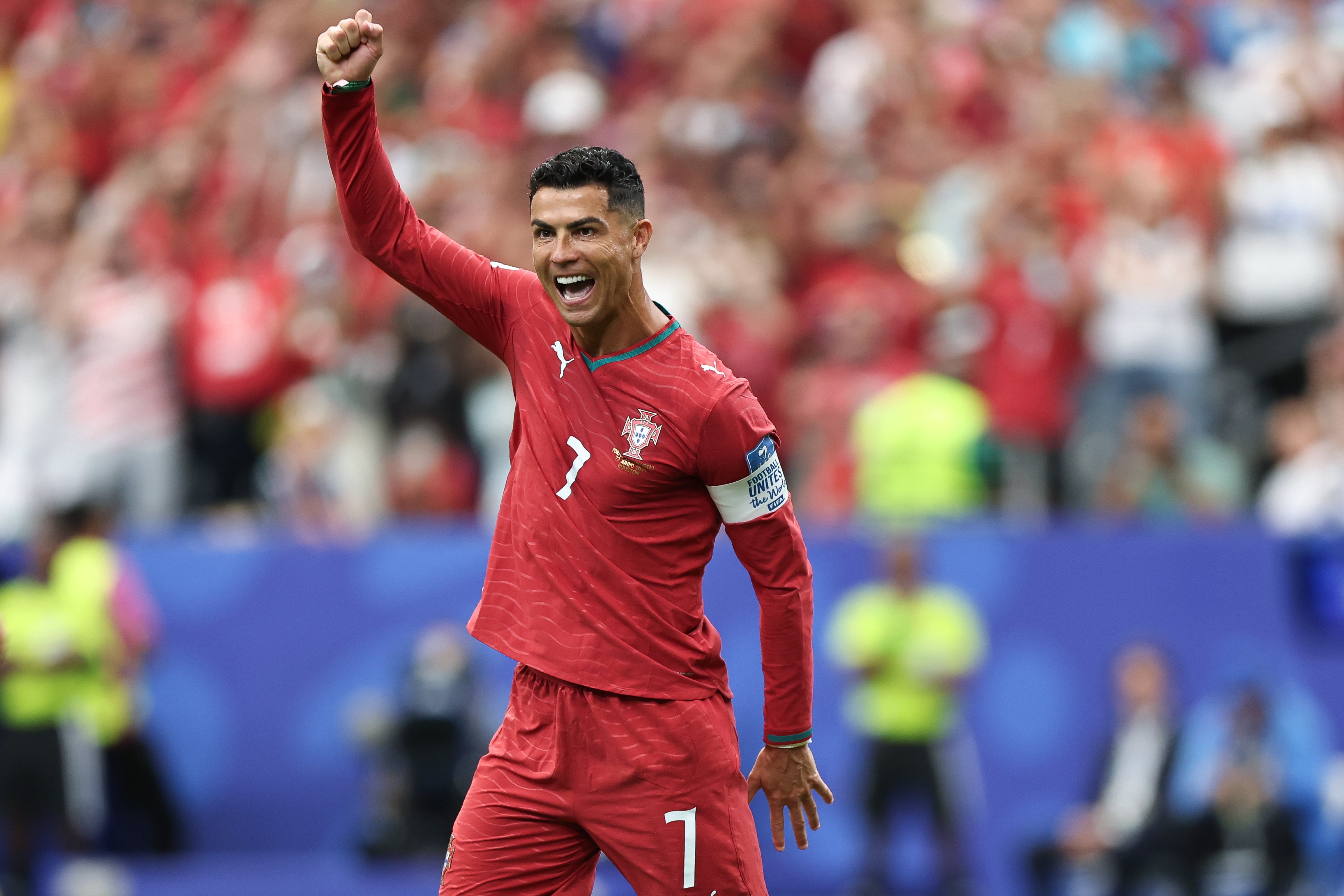
There is a dangerous, almost foolish predictability to how we treat footballing gods when they begin to look human. Following a stuttering 1-1 opening draw against the Democratic Republic of Congo, the vultures were circling above Roberto Martínez’s Portugal. The narrative was already written: a sluggish midfield, an aging icon, and an identity crisis. The world questioned if Cristiano Ronaldo’s presence was a sentimental burden rather than an asset for the Seleção.
But football has a funny way of punishing premature elegies.
Against an organized, rigid Uzbekistan side under Fabio Cannavaro, Portugal didn’t just win 5-0; they staged a tactical masterclass wrapped in pure, unadulterated emotion. At the heart of it was a 41-year-old captain writing the definitive chapter of his ‘Last Dance.’
By the time the final whistle blew in Houston, Cristiano Ronaldo had broken the weight of a 10-match international finals drought, surpassed the legendary Eusébio’s record of nine World Cup goals for his country, and achieved what no mortal has ever done before: scoring in six different editions of the FIFA World Cup (2006, 2010, 2014, 2018, 2022, 2026).

The Tactical Deep Dive: Erasing the Congo Ghost
To understand how Ronaldo found his spark, one must look at how Roberto Martínez completely re-engineered Portugal’s attacking structure from the opening match. Against DR Congo, Ronaldo looked isolated, managing a meager 25 touches as structural stagnation left him starved of service.
Against Uzbekistan’s compact 3-4-3 low block, Martínez rolled out a fluid, highly dynamic 4-2-3-1 system that prioritized rapid ball circulation, overloads in the half-spaces, and deep vertical runs from the full-backs.

1. Pinning the Back Three
Instead of having Ronaldo drop deep to construct play—which previously clogged the midfield—Martínez instructed João Félix and Bruno Fernandes to occupy the gaps between Uzbekistan’s center-backs. This pinned Abdukodir Khusanov and Rustamjon Ashurmatov deep, creating structural isolation and giving Ronaldo the freedom to lurk on the blind side of the defenders.

2. The Wing-Back Disruption
With Vitinha and the teenager João Neves expertly anchoring the pivot, Portugal’s full-backs, João Cancelo and Nuno Mendes, essentially functioned as auxiliary wingers. By pushing incredibly high up the pitch, they forced Uzbekistan’s wide midfielders to track back into defensive positions, effectively turning their 3-4-3 into a toothless 5-4-1.
The Anatomy of the Brace: How the Record Fell
The tactical blueprint bore fruit just six minutes into the match, and it delivered a moment of historic poetry.
Cancelo picked up the ball on the right flank, identifying a momentary lapse in Uzbekistan’s defensive shifting. As Félix dragged his marker away, Ronaldo made a predatory, darting run to the near post. The cross was low and precise; the finish was vintage. With a sharp, explosive half-volley, Ronaldo flashed the ball past Abduvohid Nematov.
The stadium erupted, but the true gravity of the goal lay in the history books: six World Cups, six times on the scoresheet. A monument to an unprecedented twenty-year reign at the apex of world football.
Portugal doubled their lead in the 17th minute through sheer psychological warfare. Setting up for a free-kick 20 yards out, Ronaldo stood in his iconic, theatrical stance, absorbing the collective anxiety of the Uzbek wall. But it was a brilliant ruse. As Ronaldo shaped to strike, Nuno Mendes instead stepped up, drilling a wicked, low effort into the bottom corner.
Surpassing Eusébio required another moment of pure tactical execution in the 39th minute. As Uzbekistan tried to play a higher line to salvage the game, Bruno Fernandes intercepted a loose ball in transition. Recognizing the space behind the defense, Fernandes executed a perfect, weighted through-ball. Ronaldo split the center-backs, met the pass with a sublime first touch, and calmly slotted an angled finish into the far corner. 10 World Cup goals. Eusébio’s ghost was finally answered.

Defying Time in the Last Dance
The second half was a procession of dominance. A chaotic, deflected own goal involving Nematov in the 60th minute made it four, before substitute Rafael Leão hammered a spectacular fifth into the top corner in the 87th minute. Ronaldo was denied a hat-trick only by a desperate, goal-line clearance from Khusanov, but the statement had already been made.
When Ronaldo turned to the television cameras at full-time, screaming, “I’m back, I’m back!”, it wasn’t the arrogant boast of a young star. It was the defiant roar of an old lion who refused to let the fire fade.
Every cloud has a silver lining, as Ronaldo noted post-match. After the tactical suffocations of the opening match, Portugal found their rhythm, their maturity, and most importantly, their identity. They head into their final Group K match against Colombia not as a fractured unit trying to accommodate a legend, but as a terrifyingly synchronized machine engineered to let their greatest ever player dance until the very end.
Match Summary
- Date: June 23, 2026
- Venue: Houston Stadium, Texas
- Attendance: 68,777
- Score: Portugal 5-0 Uzbekistan
- POR — Cristiano Ronaldo (6′, 39′), Nuno Mendes (17′), Abduvohid Nematov (60′ OG), Rafael Leão (87′)
Follow Fieldvision on Youtube ,Twitter , Facebook Instagram and Whatsapp Channel for more updates.

Leave a Reply