
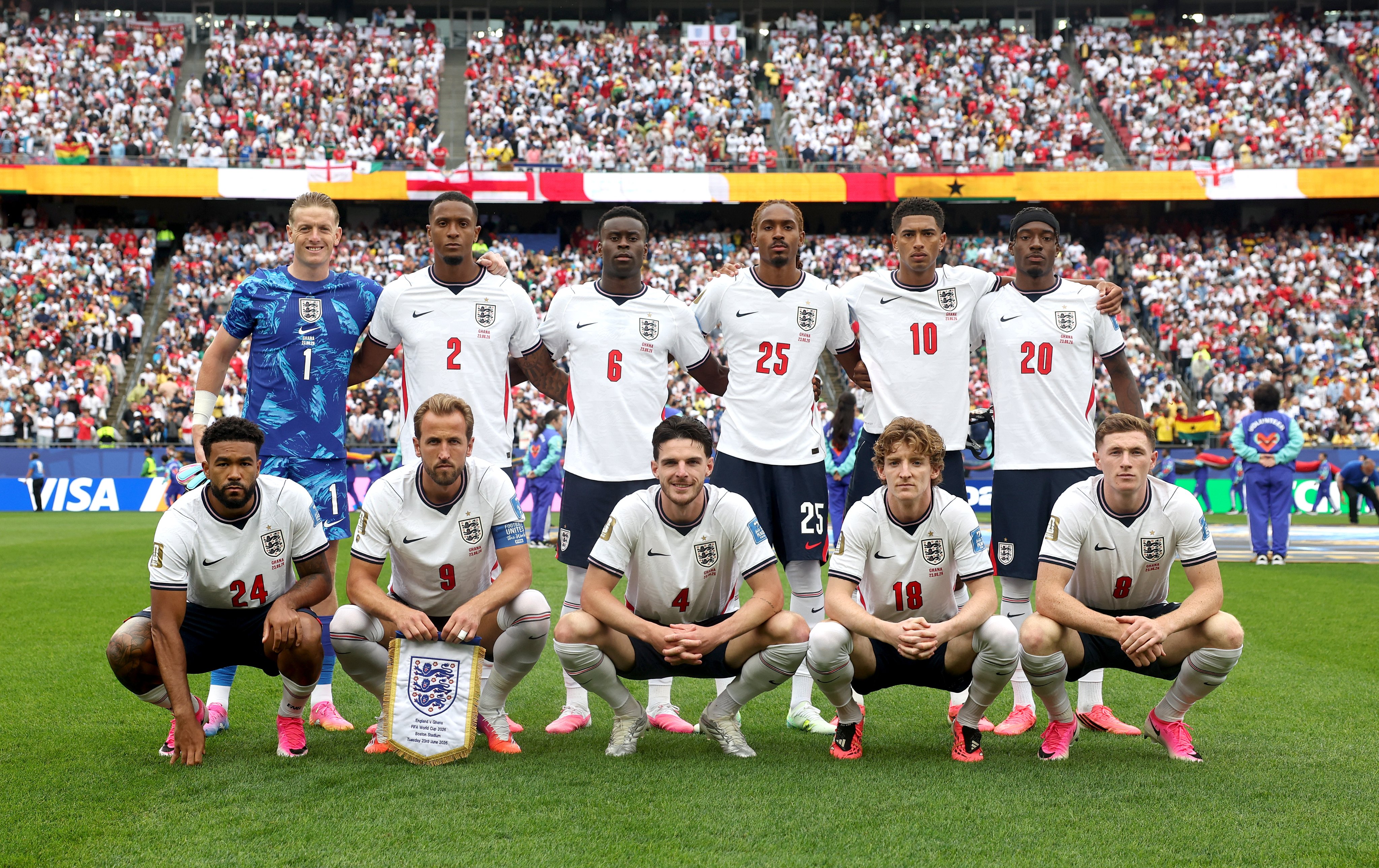
It is the oldest, most exhausting script in English football, repackaged under the neon lights of North America.
Just six days ago in the sweltering heat of Dallas, Thomas Tuchel’s England looked like a machine built for global conquest. A thrilling 4-2 dismantling of Croatia had suggested that this generation had finally shed its skin. Harry Kane was ruthless, the transitional play was devastating, and the narrative machine was already humming with the familiar, arrogant refrain of football coming home.
Then came Boston. A damp, suffocating afternoon at Foxborough, where a stubborn, brilliant Ghana side did what tournament teams always do to England: they looked them in the eye, dared them to find a creative solution, and watched them slowly run out of ideas.
The resulting 0-0 draw was more than a setback; it was a tactical and emotional regression. For the history boys, it extended a grim, psychological hoodoo. Once again, England have failed to win both of their opening two matches at a major tournament, replicating the frustrating stalemates of Euro 2024 against Denmark and Euro 2022 against the USA. It is an inability to consolidate, a systemic failure to build momentum when the summit is within reach.

The Ghosts of the Absent
Tactically, this was a match won and lost in the treatment room long before kickoff. Tuchel lined England up in a standard 4-2-3-1, but without the individual profiles to make it breathe.
When a low block is as suffocatingly disciplined as the 5-4-1 deployed by Ghana’s Thomas Partey and Jonas Adjetey, a team requires three distinct footballing currencies:
- The unpredictable gravity of Cole Palmer: Someone who slows the game down just to explode it, dragging defenders out of the half-spaces.
- The ruthless, half-turn execution of Phil Foden: A midfielder capable of operating in the claustrophobic pockets of air between Ghana’s midfield and defensive lines.
- The structural geometry of Trent Alexander-Arnold: A deep passer who can bypass a midfield screen entirely with a single, sweeping diagonal.
Without them, England’s possession was a heavy, lifeless thing. Declan Rice and Elliot Anderson rotated the ball horizontally, over and over, like hands warming over a dying fire. There was no verticality, no risk, and crucially, no balance. Nico O’Reilly and Reece James tried to force width, but it was mechanical. England had 19 shots, yet barely tested Benjamin Asare. It was possession without purpose—the exact tactical paralysis that has plagued this nation for a generation.

The Heavy Crowns of Bellingham and Saka
If the tactics were rigid, the emotional core of the team felt strangely hollow. Major tournaments are defined by moments where the system fails and individuals must transcend the chaos. In Jude Bellingham and Bukayo Saka, England boast two players built for the grandest stages in Europe. Yet, when the grip of the match tightened, both shrank into the damp Boston air.

Bellingham, usually an unstoppable force of nature, cut an increasingly exasperated figure. Thriving as a roaming number ten against Croatia, he found himself swallowed alive by Kwasi Sibo and Partey. Instead of adapting, Bellingham began dropping deeper, searching for the ball at the feet of his center-backs, completely vacating the final third and leaving Harry Kane isolated in a sea of Ghanaian shirts. By the time he was substituted for Morgan Rogers in the 72nd minute, his body language was a portrait of petulance rather than leadership.
Saka’s introduction from the bench was meant to be the antidote—a injection of direct, clutch wing-play to unbalance Gideon Mensah. Instead, the Arsenal winger looked weighed down by the sheer expectation of the shirt. His touch was heavy, his decision-making hesitant. In one late, agonizing sequence, with overlapping space beckoning, he cut inside into a crowd of three black stars, coughing up possession. It is the curse of the modern English superstar: brilliant when the system hums, but strangely muted when asked to pull an entire nation over the finish line through sheer force of will.

The Long Road to New Jersey
Thomas Tuchel will spin this. He will point to the four points on the board, the fact that a point against Panama in New Jersey secures passage to the Round of 32, and the statistical reality that England have still never lost to African opposition at a World Cup.
But football journalism is about reading the temperature of a squad, not just its ledger. The emotional high of Dallas has evaporated, replaced by the cold, creeping dread that this team, for all its glittering depth, does not know how to suffer together when the tactical blueprint breaks.
Tuchel came to England to provide European cynicism and tactical flexibility. Against Ghana, he was out-thought by a team ranked 73rd in the world. The stars are missing, the present icons are misfiring, and history is tapping England on the shoulder once again. The group stage will be survived, but if this downfall in Boston teaches us anything, it’s that the ghosts of England’s past are very much alive in 2026.
Follow Fieldvision on Youtube ,Twitter , Facebook Instagram and Whatsapp Channel for more updates.




Leave a Reply