
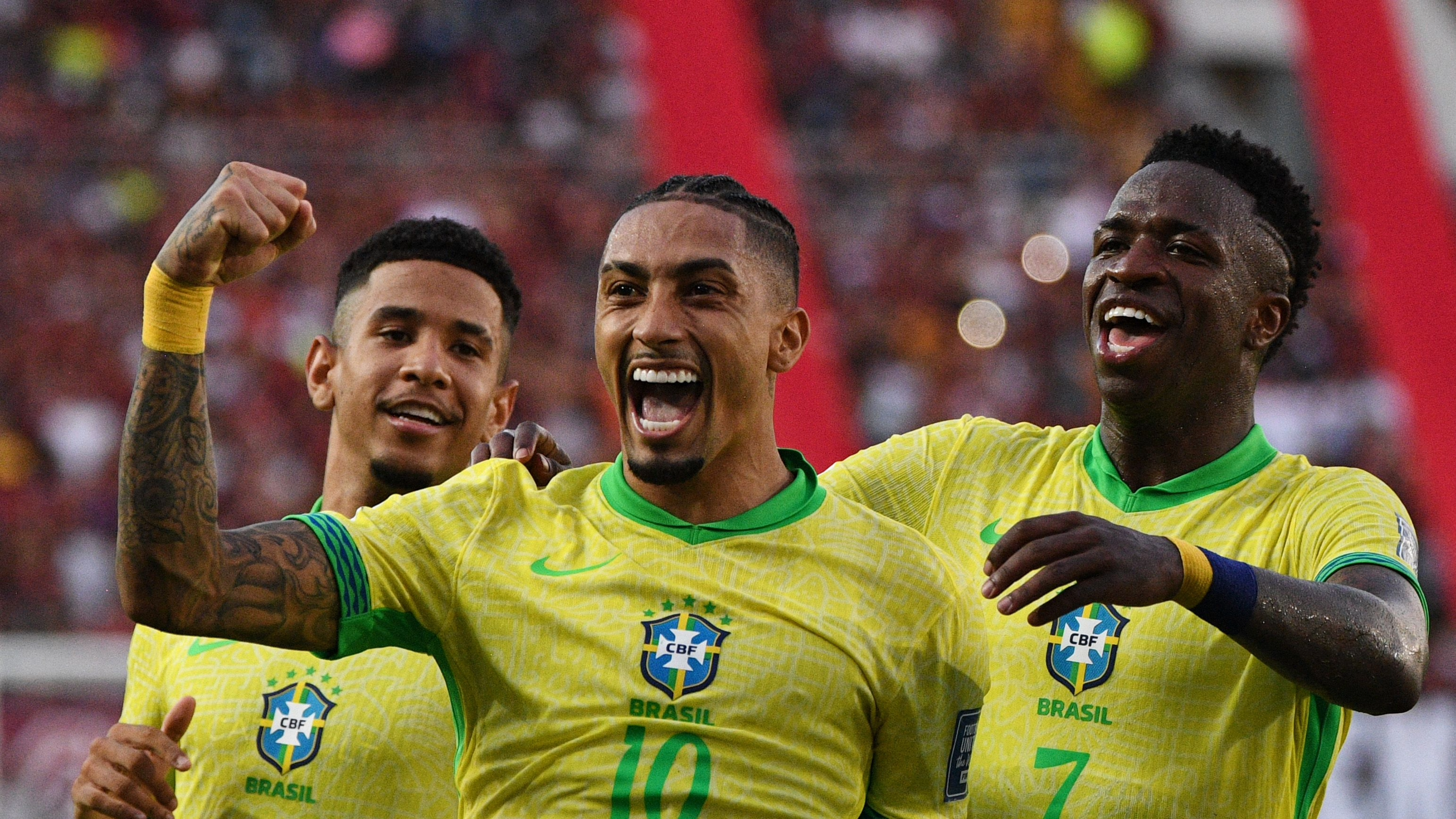
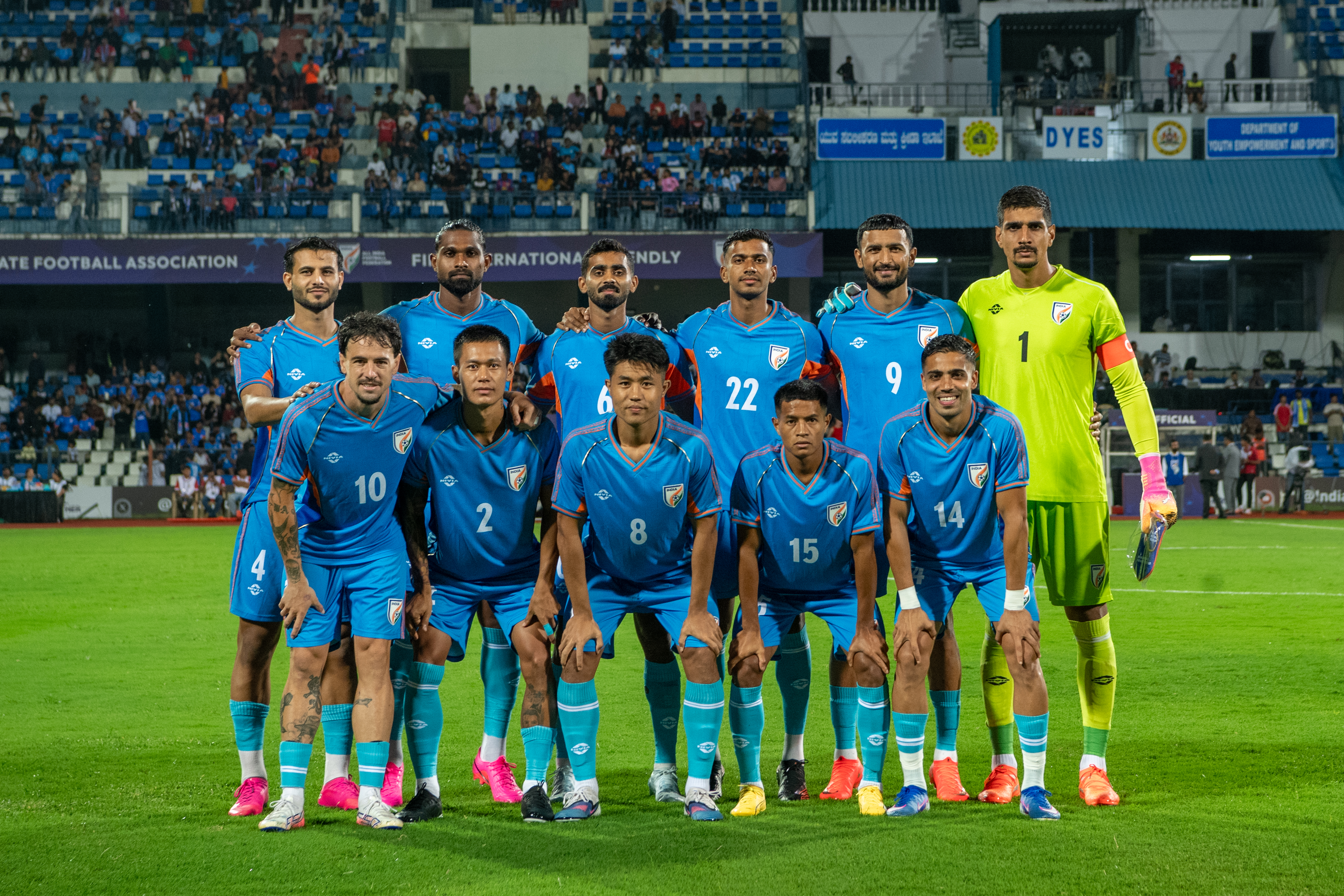
Indian Football Team is currently 138th in the world. It is a difficult number to reconcile with the country’s relationship with football. This is a country where children grow up arguing about Messi and Cristiano, idolising Neymar and Vinicius; where World Cup nights turn neighbourhoods into rival camps; where Brazil shirts appear on streets thousands of miles from Rio de Janeiro.
Yet India’s own national team remains largely confined to pockets of passionate support: Kolkata, Kerala, Goa, and the Northeast.
Outside those strongholds, the Blue Tigers often struggle to command the same attention as European clubs, international superstars or, inevitably, cricket.
That is the great contradiction of Indian football.
Do we lack the Fans?
Actually, the answer is not what feels obvious. India does not have a shortage of football fans. It has a shortage of sustained attention for Indian football. And that is why what is about to happen in Kolkata matters.
Brazil are coming. Then, Uruguay. In fact, Uruguay is already in the city.
Two of football’s most storied nations will walk into the Salt Lake Stadium over the next week and, after meticulous planning and convincing by the AIFF for friendlies and almost by accident, will put Indian football under a much brighter light than it normally enjoys. The question is whether India can keep that light burning after they leave.
From 138th to a night against Brazil
The story begins in a rather less glamorous place. The Indian Football team is currently ranked 138th in the world. The domestic football ecosystem has been caught in uncertainty. The national league has struggled for stability. The national team has spent too much time fighting for relevance rather than competing for headlines.
Then came Panama. Ranked 44th in the world, Panama represented a sizeable jump in quality. India did not win. But they drew 1-1.
The home team scored first. They competed. They made a significantly higher-ranked opponent work. It was not a revolution. Rather, it was a reminder – Indian footballers can still produce moments that make people stop and watch.
Now imagine the size of that audience, both domestic and global, when the opponent is Brazil!
Kolkata has always understood the Brazilian obsession
Brazil does not need an introduction in Kolkata. The city has been carrying this relationship for decades. Pele came here in 1977. The visit became part of Kolkata’s football folklore.
Since then, Brazilian football has remained deeply embedded in the city’s sporting culture. Every World Cup brings the colours back. Yellow flags. Brazil shirts. Painted faces. Arguments in tea shops. Children kicking footballs in narrow streets while pretending to be Brazilian stars. For many supporters, Brazil was their first footballing love.
That is why this fixture feels different. For once, the football on television is coming to them.

Brazil will not be thousands of kilometres and a 12-hour time zone away. They will be at the Salt Lake. And on the other side – India.
That is the spectacle. But the spectacle is not the story. The story is what Indian football can do with it.
The country that loves foreign football
India’s football audience is not small. It is simply fragmented. Fans follow the Premier League. They follow La Liga. They watch the Champions League. They wake up in the middle of the night for World Cup matches. They know the players, the clubs. They buy the shirts; they argue about tactics. They care deeply.
But much of that passion exists outside Indian football. That distinction matters.
The problem is not convincing Indians to like football. Football has already won that battle. The challenge is convincing them that Indian football deserves the same emotional investment.
Brazil and Uruguay cannot solve that problem. But they can allow India to attack it.
Borrowed attention can become Indian attention
That is the real opportunity in Kolkata. Brazil will bring the audience with them. Uruguay will bring another wave. Broadcasters will pay attention. Brands will pay attention. Sponsors will pay attention. Football fans who rarely watch India will suddenly have a reason to do so.
For once, Indian football will not have to fight for attention. It will have it.
The commercial value of that should not be underestimated. A packed stadium demonstrates demand. A large television audience demonstrates reach. Strong social-media engagement demonstrates relevance. And a competitive Indian performance can turn all three into something more valuable: belief.
Sponsors do not need India to beat Brazil. They need evidence that people care. Broadcasters do not need an Indian victory. They need viewers who come back for the next match. That is the opportunity hiding inside these two fixtures.

And the players get their own stage. There is another audience watching. Scouts. For Indian footballers, games like these are rare. An Indian defender will face attackers accustomed to the highest level of European football. An Indian midfielder will have to cope with a speed of play that domestic competition cannot always reproduce. An Indian forward could find himself running at defenders who spend their seasons competing against some of the world’s best attackers.
That experience is priceless. So is the exposure. A good performance against Brazil or Uruguay does not guarantee a move to Europe.
Football does not work that neatly. But football scouts watch football. And these will be some of the most heavily watched Indian performances in years.
One player could emerge. One performance could travel. One opportunity could follow. Indian football needs more players visible beyond its own borders. This is one of the few stages that can provide that visibility instantly.
Even the grass tells a story
There is an almost perfect metaphor sitting underneath all of this. The Salt Lake Stadium pitch had to be transformed ahead of Brazil and Uruguay’s arrival.
Specialists were brought in and stayed in the city for a month. The surface was worked on. Standards were raised. Suddenly, the pitch had to be world-class. Because Brazil was coming – it is a revealing moment.
Why should the pitch only receive this treatment when Brazil arrives? Why should Indian football infrastructure only reach international standards when global stars are visiting?
Perhaps the real legacy of these matches should be that the standards remain after the stars leave. The same should apply to everything else. The broadcast, the marketing, the stadiums, the league, the academies, the commercial model, the fan experience.
Brazil should not be the reason India temporarily becomes better at football. Brazil should be the reason India decides that better is the standard.
The biggest danger is also the easiest outcome
There will be photographs, full stands, Brazilian flags. There will also be television audiences. There will be headlines. For two evenings, Indian football will feel enormous.
And then Brazil will leave. Uruguay will leave.
The international stars will return to their clubs. The global media will move on. And Indian football could return to exactly where it was before. That would make these matches nothing more than a travelling circus.
The real success will be measured weeks later. Are more people watching India? Are sponsors still interested? Are broadcasters investing? Has the national team gained followers who were previously interested only in Brazil, Uruguay or European football?
Those are the numbers worth watching.
India does not need to beat Brazil. If we do, it would be extraordinary. If they lose, nobody should pretend the evening was meaningless. The more important contest is taking place outside the 90 minutes.
Can India convert spectacle into spectatorship? Can spectatorship become support? Can support become commercial value? And can commercial value eventually become a stronger football ecosystem?
That is the chain Indian football desperately needs. Brazil and Uruguay can start it. But it is India that has to continue it.
The yellow shirts will eventually disappear
On the night Brazil play in Kolkata, the stands will probably be full of yellow. That is not a failure. It is the starting point. Those fans already love football – Indian football’s task is to give them another team to love.
Perhaps somewhere in that stadium, a child wearing a Brazilian shirt will watch an Indian player compete against his heroes. Perhaps that child will remember the Indian player’s name. Perhaps he/she will search for him afterwards. Perhaps he/she will watch India’s next game.
That sounds small. It is not. Football cultures are built that way. One player. One match. One memory. One generation passing the obsession to the next.
When Brazil leaves, the real game begins
Brazil will eventually fly home. Uruguay will follow. The Salt Lake Stadium will become quiet again.
The lights will go out. The flags will come down. But Indian football will remain. At 138th. Still dealing with its structural problems, still searching for a stronger league and a more consistent national-team audience. But it will also have had something rare. A moment when the whole country had a reason to look at its football.
The challenge is not to make India fall in love with Brazil. India already has. The challenge is to make some of those people stay for India. That is what these matches can mean. Not that India suddenly belongs among the world’s footballing giants, not that two friendlies can repair decades of problems. But that, for once, Indian football has been handed the one thing it has struggled most to find: attention.
Now comes the difficult part. Turning attention into interest, interest into support, support into investment, and investment into a football culture that does not need Brazil to visit before India starts believing in itself.
Because when the final Brazilian shirt disappears from the streets of Kolkata, the question will remain. Will Indians still be watching India?
Follow Fieldvision on Youtube ,Twitter , Facebook Instagram and Whatsapp Channel for more updates.

Leave a Reply