
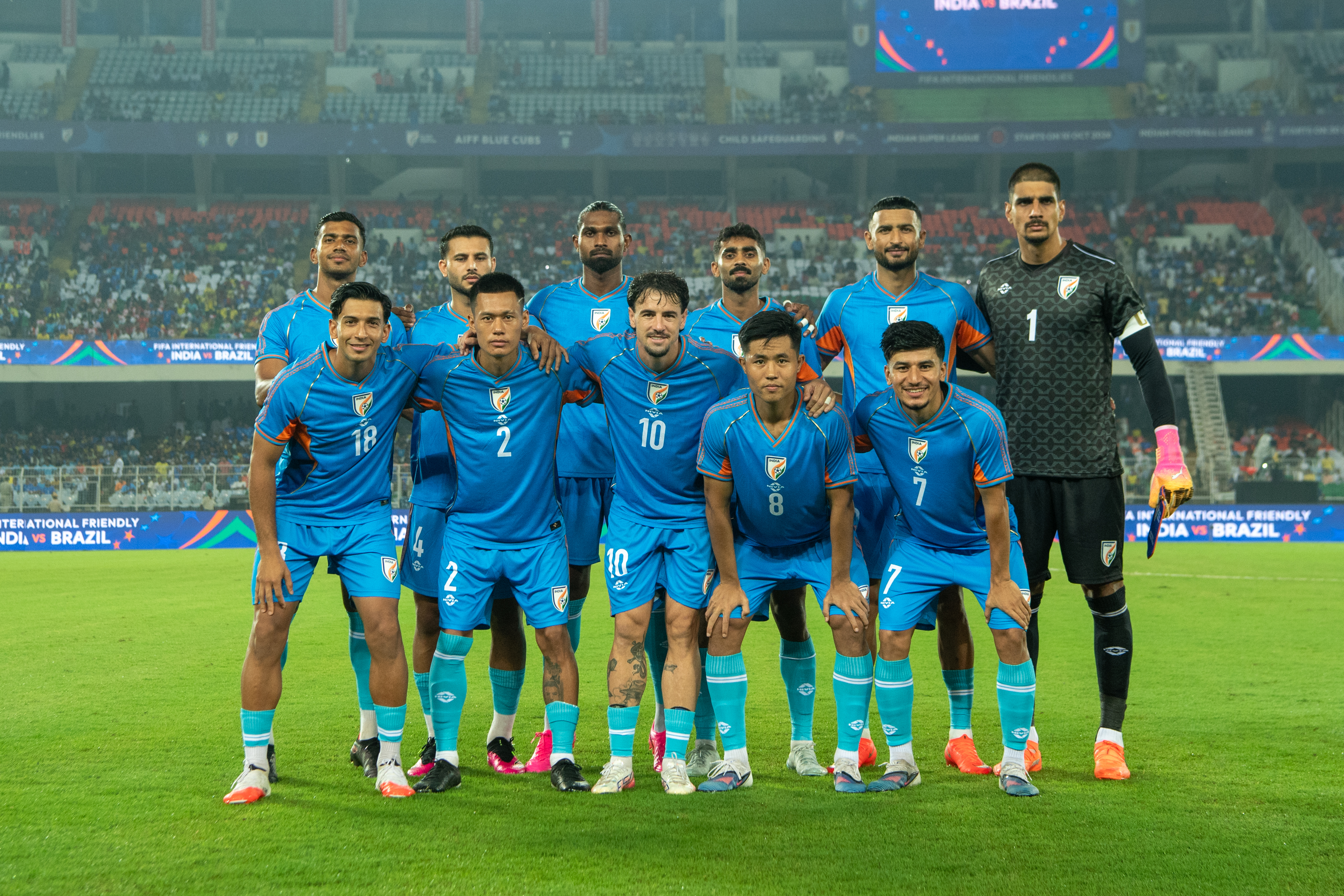
Many a kingdom in the history were dismantled by those entrusted with their preservation, and this tragedy is disconcerting. Indian football in its present predicament invites precisely such an examination as a sport struggling against an institution caught between the magnificence of its promise and the inadequacy of its guardians. Yes, the Indian Super League continues to offer the outward paraphernalia of professional football, but, the survival of a spectacle must not be confused with the vitality of the institution that sustains it. The question, therefore, is not whether football is being played in India. It is whether the structures governing it remain worthy of the game.
John Lydgate’s The Fall of Princes, edited by Henry Bergen address that downfall of the mighty is an invitation to examine the vanity, misjudgment and moral infirmity that make such downfall possible. And when the custodians mistake the inheritance for their own possession, the kingdom may retain its banners, its ceremonies and its crown. What it loses, however, is the one thing that gives all three their meaning: the faith of its people. In his John Lydgate’s Fall of Princes, Nigel Mortimer records the long history of the poet’s critical fortunes, observing:
“Nearly every account of Lydgate’s critical fortunes includes deadening judgements of Joseph Ritson, who in 1802 famously branded Lydgate ‘this volumnious, prosaick, and driveling monk’.”

Standing 138th in the FIFA rankings, and having failed to qualify for the 2027 AFC Asian Cup, Indian football deserves this examination freed from both nostalgic indulgence and indiscriminate condemnation. Maybe, statistics establish the predicament, but, they cannot explain how has a nation with an immense population, expanding commercial sporting culture and passionate following struggled to translate ambition into sustained international progress?
In The Fall of Princes, John Lydgate depicts the precariousness of power through the struggles of Marius and Sulla. Marius’s subjugation and Sulla’s ascendancy illustrate how domination and personal ambition can imperil those subjected to authority. Any relevance of this comparison with football administration will be literal, historical, and moral. Per I, Problems in Indian Football arise from interacting deficiencies in developmental pathways, competitive exposure, domestic structures and long-term planning. Its tragedy lies in allowing the distance between ambition and achievement to become an enduring condition.
The Indian Super League (ISL) arrived with a promise and premise of modernisation through corporate investment, international players and professional presentation. But, commercial modernisation and sporting development are never synonymous. If any, the commercial uncertainty and figures surrounding the ISL do not independently establish culpability, but, ask how did a competition presented as the vehicle of professional transformation become so vulnerable to contractual uncertainty and commercial retreat?

Geoffrey Chaucer’s pilgrims reveal the discrepancy between professed virtue and actual conduct. His critical method offers a useful framework for examining sporting institutions. Likewise, administrators speak of development, reform, opportunity and national pride; their declarations, however, must be judged by their consequences. Are contractual obligations honoured? Can clubs plan beyond a single season? Do young players receive dependable opportunities? Are decisions transparent and disagreements resolved without jeopardising the competition?
Criticism must resist equating every dispute with personal vanity or alleging corruption without evidence. Nevertheless, persistent institutional conflict warrants scrutiny of whether authority has become more concerned with preserving its position than fulfilling its purpose. An institution should function to serve the activity entrusted to it, and when that relationship is inverted, the appearance of control becomes a substitute for progress. A footballer’s career is governed by a biological clock that does not wait for administrative settlements. Lost seasons can mean diminished earnings, interrupted development and fewer opportunities to establish a professional future.
William Langland’s Piers Plowman examines the relationship between labour, conscience and social responsibility. Indian football faces a similar test whether its governing institutions protect the players who sustain the sport or leave them to bear the cost of administrative and commercial failures. Ultimately, the credibility of football administration must be judged not by its promises, but by how effectively it safeguards players’ interests and the future of the game.
But, hang on a minute, will you? The deeper problem is architectural. A competitive national team emerges from years of coaching, scouting, tactical education, sports science and meaningful competition. Grassroots programmes, academies, state associations, youth tournaments, the I-League, the ISL and national teams must function as connected parts of a coherent developmental system. Any departures from franchises in the prospective calendar do not automatically prove administrative misconduct, but raise questions about financial risk, institutional stability and the conditions necessary for sustained club development.

Tragedy, in its classical sense examines the errors and choices through which suffering becomes possible. India’s predicament, therefore, need not constitute an irreversible destiny. The ISL’s return in 2026 under a more club-led commercial model alongside announced constitutional reforms within the All India Football Federation (AIFF) creates an opportunity for institutional renewal. Whether these developments produce meaningful change must be determined by implementation, not announcement. More than any, reform requires transparent governance, credible financial arrangements, timely competitions, enforceable player protections, investment in youth development and a coherent long-term strategy.
For the young footballer waiting upon a trial, the club struggling to preserve its existence, the journalist travelling in pursuit of a story, the umpire rising before dawn in some forgotten village to work on his/her fitness, the supporter who returns despite disappointment, and the family that entrusts its hopes to a child’s talent, football is labour, aspiration, livelihood and the fragile promise that something greater may emerge from the ordinary sacrifices of those who serve the game.
History says, the crown survives, the banners remain unfurled, and the ceremonies proceed with their accustomed solemnity, even as the substance of the kingdom quietly departs. So, too, may football retain its stadiums, its seasons and the outward ornaments of professionalism while surrendering the trust upon which its future depends. In the same way, the tragedy of Indian football may not be that its kingdom has fallen, but that those entrusted with its inheritance have yet to comprehend what it means to rule it. For, the crown was given a trust to honour, a legacy to enlarge and a future to bequeath.
And when posterity comes to reckon their stewardship, it will not ask how splendidly they wore the crown, but how much of the kingdom remained when they laid it down.
Follow Fieldvision on Youtube ,Twitter , Facebook Instagram and Whatsapp Channel for more updates.


Leave a Reply