
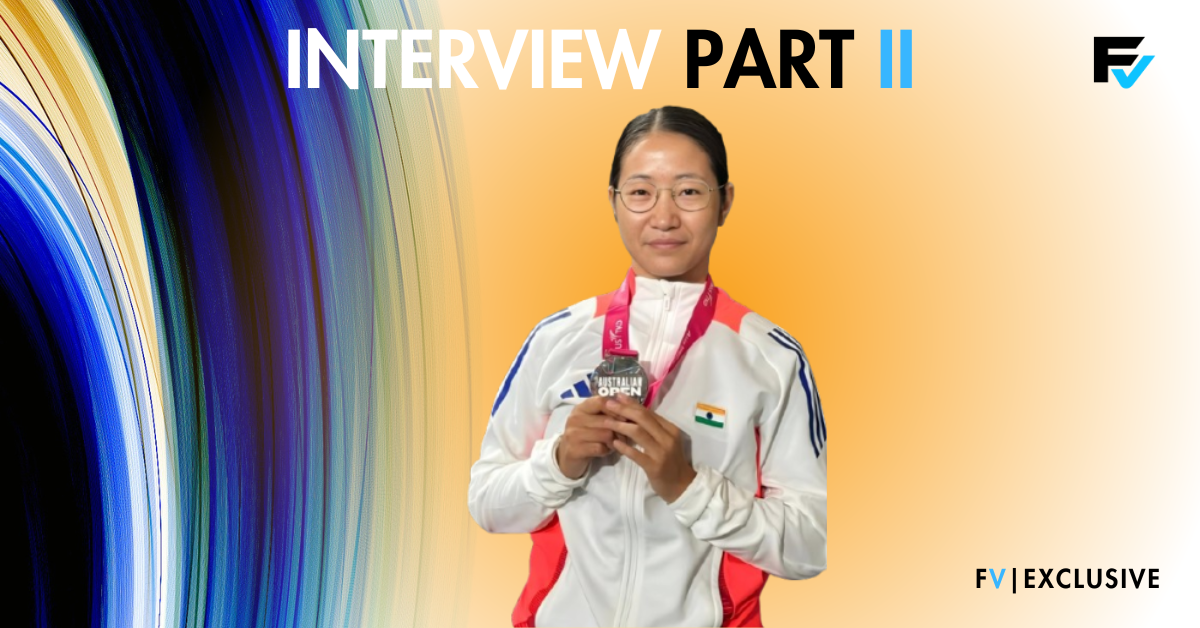

In the second part of the exclusive interview with Indian Taekwando player Rupa Bayor, she delves deeper into the multifaceted challenges faced by athletes, particularly those hailing from Arunachal Pradesh. She candidly addresses the issues stemming from the dual federation system, her rigorous daily routine and diet, and the persistent hurdles related to visa approvals for international events held in China.
Rupa makes a passionate appeal for support from the Narendra Modi led Indian government highlighting their far-reaching implications for athletes striving to represent the country on a global stage. Excerpts of the conversations as below.
Read the first part of interview here: FV Exclusive | India’s star Rupa Bayor’s journey in Taekwondo and its global landscape
Dual Federation and Its Impact on Athletes
Rupa begins by addressing the long-standing issue of the dual federation system in Indian Taekwondo, which has created significant roadblocks for athletes. While acknowledging the support federations provide, she doesn’t hold back in describing the problems players face due to their internal conflicts.
“Every player knows what the problem of the federation is. But the problem of the federation can’t deal with an unlisted player. It affects the player more,” she explains.
She appeals to the Indian government and sports ministry to step in and resolve these issues. “You should at least choose the right leader. If you are not a strong leader, it is very difficult to move forward,” she emphasizes. Drawing from her own struggles, Rupa highlights the need for leadership that prioritizes athletes and focuses on creating a more streamlined and supportive system. “Because of you guys not giving attention, everyone is suffering today. Especially the players.”
Further adding she said, “If you want to take this sport forward, you have to pay attention. And please go and see the leader and ground level. I am saying this with folded hands because I have come from there.”
Read our interview with the 2024 Paris Olympian Rhythm Sangwan here: FV Exclusive | Breaking Records and Chasing Dreams One Step At A Time: The Rhythm Sangwan Story
A Day in the Life of a Champion
Rupa’s dedication to her craft is evident in her disciplined daily routine. She starts her day early, waking up at 6 a.m. and heading straight into rigorous training sessions that can last until the afternoon. After a brief rest and preparing her meals, she gears up for evening physical training sessions.
“I wake up at 6 in the morning, get ready and leave at 7. From 7, we sometimes have 1 or 2 in the evening[training sessions]. Then I cook my food in 2 hours, then I sleep. I sleep for an hour, then I have a session in the evening,” she says, giving a glimpse into her exhausting schedule. Despite her packed day, she remains motivated, focusing on both physical and mental strength.
Her diet reflects her cultural roots and athletic needs. “My diet is different. For example, I am a non-vegetarian. My diet is mostly non-vegetarian, and I eat rice. This is how we live in Arunachal I used to have a lot of problems in my body, but I fixed them with proper food,” she narrates.
Rupa’s diet and routine highlight the unique challenges faced by athletes from diverse regions, where resources and training facilities may not always align with their needs and taste. “We have non-veg food. I don’t know the name of it, but I eat it. I don’t have a clue about veg food,” she adds humorously showing her straightforward personality.
Read our interview with the newest Dronacharya awardee and the veteran hockey coach Sandeep Sangwan here: Turning Grass into Gold: Sandeep Sangwan’s Odyssey to Coaching Excellence
On Visa Issues for Arunachal Athletes
One of the most significant challenges Rupa discusses is the recurring issue of visa rejections for athletes from Arunachal Pradesh, especially for events held in China. This problem has been a longstanding barrier for many players from the region. “My passport is Indian. Everything I have is Indian. Why are you stopping me from doing this?” she asks with the frustration visible on her face.
Rupa recounts how such issues have repeatedly affected athletes over the years. “A long time ago, Archers and Wushu players were stopped. This problem has not started just now. This problem has been going on for years,” she explains. The geopolitical tensions between India and China have often resulted in Arunachal athletes being caught in the crossfire, denied visas despite their Indian citizenship.
The emotional toll of these denials is immense. “We don’t know what the problem is between you. But we know that we are an Indian citizen. I have an Indian passport, and I live in an Indian land. Why don’t you cooperate with us?” she questions.
Her appeal to the Indian government is both heartfelt and urgent. “The government should take a big action on this. We should fight the Chinese Government. But who is listening to us? No one will listen to us. How much we have to work for this?” she laments.
Rupa’s words highlight a deeper sense of alienation and frustration faced by athletes from her state. “Do you guys consider us Indians? That’s why you guys are not taking any action. That’s it. There’s nothing else,” she says, her voice carrying the weight of years of struggle and disappointment.
We at Fieldvision, aim to make a change in whatever little way we could and by highlighting Rupa’s story we hope that her struggle sets an example to the authorities that are in charge of the sport and work diligently to improve the sporting ecosystem in the country.
We also request Government of India and the Sports Ministry to find a way for our athletes from Arunachal Pradesh so that they can compete in the events held in Chinese region.
We would like to thank Meraki Connect, Welspun and Rupa herself for helping us in organising this interview.
Follow Fieldvision on Youtube ,Twitter , Facebook Instagram and Whatsapp Channel for more updates.


Leave a Reply