
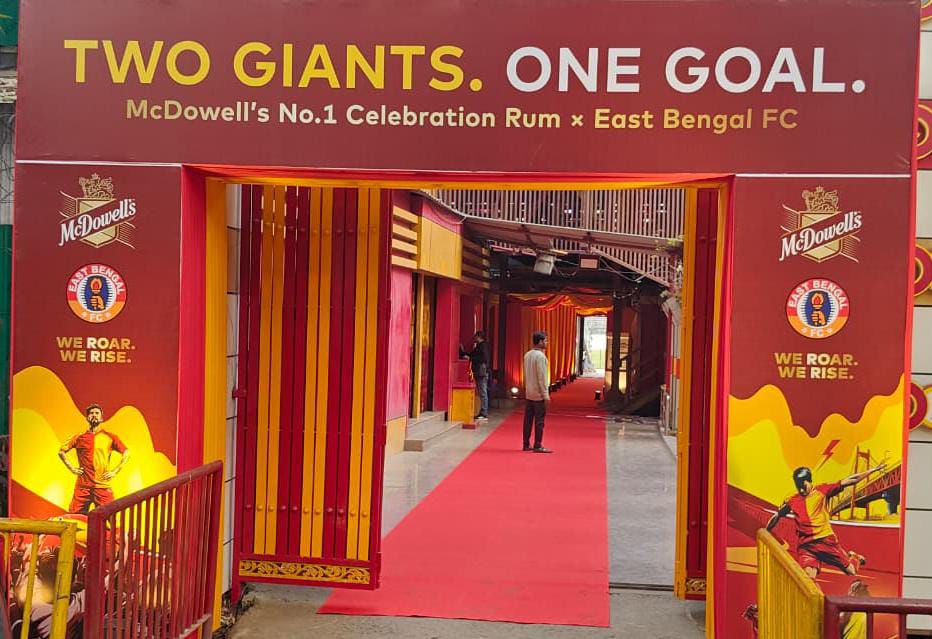

In a time when Indian football is struggling to attract and retain sponsors, East Bengal FC pulling in yet another major brand feels almost surreal. The Red and Gold Brigade have added McDowell’s as a co-sponsor, rekindling a historic relationship with parent company United Breweries—a partnership that once defined an era of glamour and financial stability for the club.
According to a top club official, McDowell’s will not feature directly on the playing jersey but will be associated as a co-sponsor and lounge partner. The deal, executed by East Bengal officials and later handed over to Emami, also covers branding rights for the newly renovated club lounge, which was re-inaugurated recently. While fans may not see the McDowell’s logo on match-day kits, the commercial significance of this partnership is anything but invisible.
For older supporters, the name United Breweries instantly triggers nostalgia. During the late 20th century, UB’s association with East Bengal symbolised a golden age—when big corporate houses backed Indian football clubs, players were local icons, and the Kolkata Derby was one of the biggest sporting events in Asia. The return of a UB brand, even indirectly through McDowell’s, feels like history coming full circle.
But this deal is not just about sentiment. It is about relevance and resilience.

Indian football today is facing one of its toughest commercial phases. Clubs are struggling with shrinking broadcast revenues, uncertain league structures, limited fan monetisation, and declining corporate interest. Many ISL and I-League teams have lost sponsors or are surviving on bare-minimum partnerships. In such an environment, landing a brand like McDowell’s—part of one of India’s biggest FMCG-alcohol conglomerates—is a major statement.
What makes this even more impressive is that East Bengal are not exactly at their sporting peak. The club is still rebuilding its identity in the post-legacy era, navigating ownership transitions, and chasing consistency on the pitch. Yet, off the field, their brand equity remains unmatched. Few clubs in India can still offer what East Bengal does: a century-old legacy, emotional fanbase, national recognition, and cultural relevance that goes beyond football.
This partnership highlights something crucial—East Bengal is still commercially bankable, even when Indian football itself is not.
For Emami, this strengthens their portfolio of partners and reinforces the club’s positioning as a premium sports property. For McDowell’s, it is a smart emotional play—aligning with a heritage brand that resonates with multiple generations. And for Indian football, it is a rare positive signal in an otherwise bleak sponsorship landscape.
In an era where clubs are desperate for survival, East Bengal is still attracting brands by selling belief, history, and loyalty. The McDowell’s deal may not come with a jersey logo, but symbolically, it sends a loud message:
Legacy still sells. And East Bengal still matters.
Follow Fieldvision on Youtube ,Twitter , Facebook Instagram and Whatsapp Channel for more updates.
Leave a Reply