
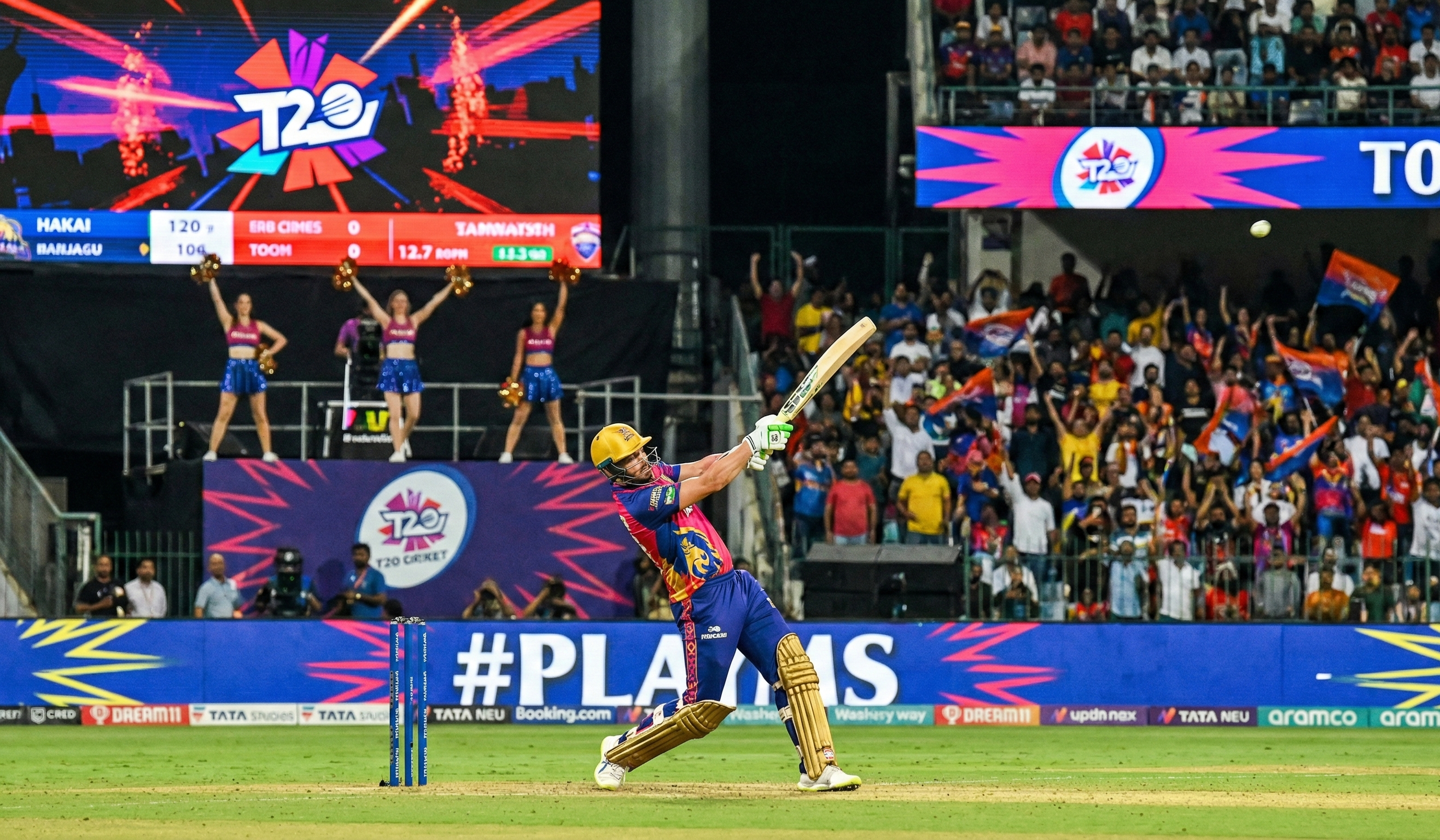

It’s hard to imagine the cricketing landscape without the frantic energy of Twenty20. Yet, a mere two decades ago, the very idea of a three-hour cricket match was met with skepticism, even ridicule, by purists. They called it “hit-and-giggle” cricket—a novelty act meant to fill empty seats on weekday evenings.
Fast forward to 2026, and T20 isn’t just a format; it’s the sport’s economic engine and its primary cultural ambassador. It has revitalized the game, redefined athleticism, and profoundly impacted how society consumes sport.
The Tactical Shift: A Game of Geometric Aggression
The evolution of T20 on the field has been nothing short of a scientific revolution. In the early 2000s, teams approached T20 like a shortened One Day International. Today, it is its own beast.
We’ve witnessed a paradigm shift in batting where boundaries are no longer a bonus—they are the baseline. The audacious ramp shot, the scoop, and the reverse sweep have evolved from flamboyant flourishes into essential survival tools. Batters now train like Olympic sprinters and powerlifters, treating the cricket pitch as a zone of “geometric aggression.”
Bowlers, in response, have become the game’s greatest innovators. The traditional virtues of line and length have been replaced by a “defensive-offensive” hybrid. The knuckleball, the wide yorker, and the back-of-the-hand slower ball are now deployed with the precision of a surgeon to outfox batters. Fielding, once a passive rest period between overs, has become a high-speed pursuit of acrobatic saves and “relay catches” that belong in a circus highlight reel.
The Franchise Boom: Cricket’s Multi-Billion Dollar Engine
The growth of the format was catalyzed by the birth of the Indian Premier League (IPL). What started as an experiment in 2008 has become a global sporting institution, recently valued alongside the likes of the NFL and the English Premier League in terms of broadcasting rights per match.
The “IPL model” spawned a global ecosystem:
- The Big Bash (Australia): Bringing family-centric entertainment to the summer.
- The CPL (Caribbean): Infusing the game with carnival energy and “sportainment.”
- The PSL (Pakistan) & SA20 (South Africa): Proving that domestic passion can fuel world-class leagues.
This franchise explosion has fundamentally changed the career path of a cricketer. A player can now be a “global nomad,” specializing in the short format and playing for different cities across six continents, often earning more in six weeks than their predecessors did in a decade.
The Societal Ripple: Accessibility and Inclusion
Perhaps the most significant impact of T20 is its role as a “social lubricant.” For a sport often criticized for its elitism and staggering time commitment (five days for a Test match!), T20 offered instant gratification. Its concise three-hour window fits perfectly into the modern attention economy. It has brought a demographic shift to the stands—more women, more children, and more casual fans who enjoy the pyrotechnics and music as much as the bowling changes.
Beyond entertainment, T20 has become a tool for globalization. We see the rise of “Associate Nations”—like the USA, Nepal, and Oman—who find the T20 format a more accessible entry point to the world stage than the grueling requirements of Test cricket. It has democratized the sport, making the dream of playing in a World Cup a reality for nations far beyond the Commonwealth’s traditional borders.
A Global Village in the Dressing Room
Finally, T20 has shrunk the world. In a franchise dressing room, an Australian fast bowler might share a meal with an Indian spinner and a West Indian power-hitter. This cross-pollination of cultures has eroded old rivalries and replaced them with professional camaraderie.
While the debate over the “death of Test cricket” lingers, it is undeniable that T20 has provided the financial lifeblood that keeps the entire sport breathing. It is a testament to innovation, adaptability, and the enduring power of a game that continues to capture hearts, one six at a time.
Follow Fieldvision on Youtube ,Twitter , Facebook Instagram and Whatsapp Channel for more updates.

Leave a Reply