
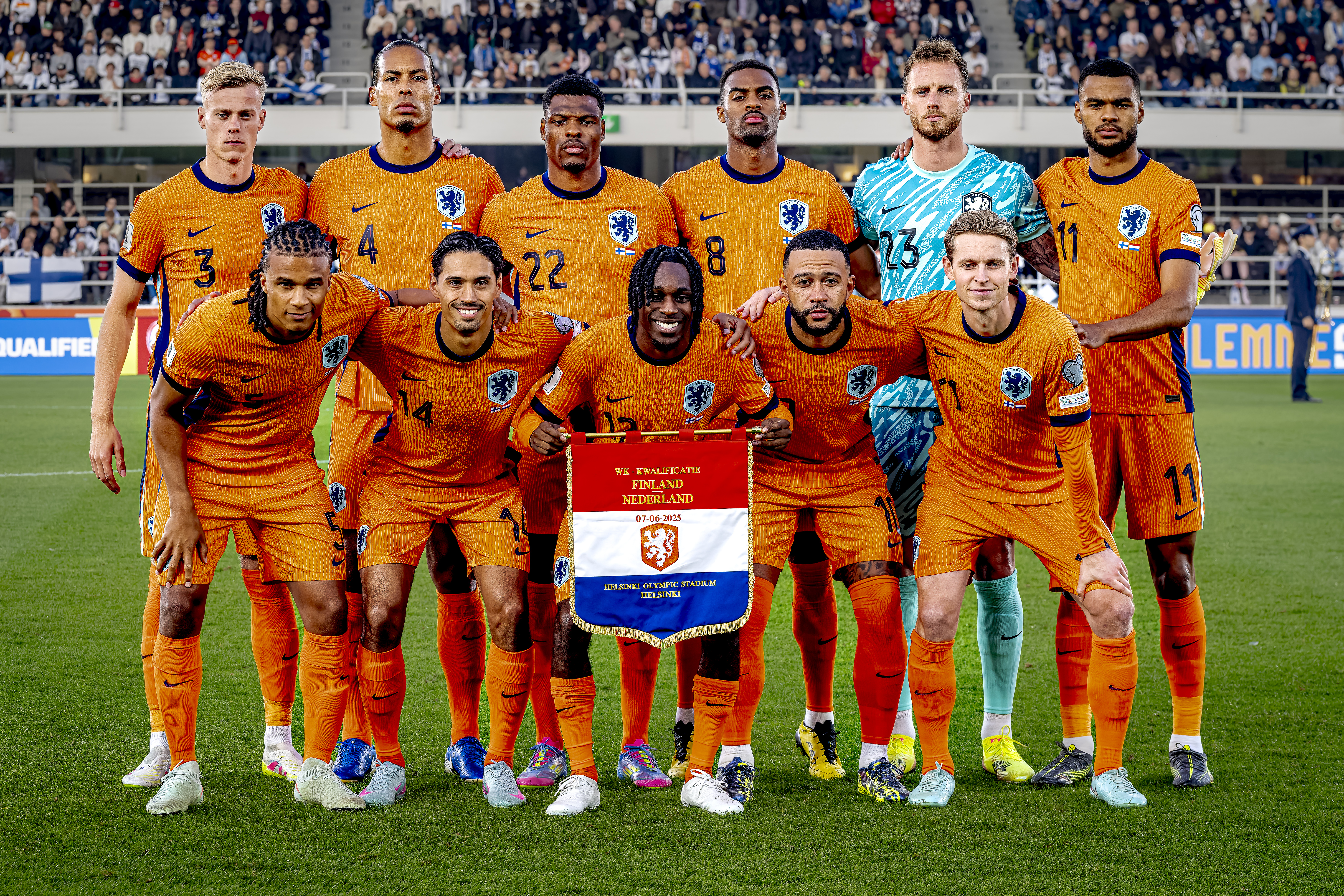
There is a distinct, rhythmic hum echoing out of the Dutch camp as the group stage of the 2026 FIFA World Cup concludes. It isn’t the brash, loud declaration of intent we have come to expect from the tournament favourites like Brazil, Argentina, Spain, Portugal or France. Instead, it is a quiet, mechanical precision.
While global cameras track every breath of the co-hosts and the traditional powerhouses, Ronald Koeman’s Oranje have casually dismantled Group F. A hard-fought 2-2 draw with a brilliant Japan was followed by an absolute destruction of Sweden (5-1) and a clinical win against Tunisia (3-1). Seven points, unbeaten, top of the group, and a ticket to Monterrey to face Morocco in the knockout stages.
Yet, nobody is talking about them. They are the tournament’s ultimate ghost ship(like the Flying Dutchman)—sailing smoothly, heavily armed, and entirely under the radar. They are the terrifying dark horses no one wants to look at, perhaps because looking too closely at the Netherlands in a World Cup forces us to confront football’s most beautiful, tragic history.

The Architecture of the Shadow: A Tactical Masterclass
Tactically, Koeman has built something remarkably pragmatic yet devastatingly fluid. The ghost of Total Football always hovers over this team, demanding aesthetic perfection, but this iteration of the Netherlands is defined by structural control.
Operating primarily in a 4-3-3 that easily morphs into a suffocating mid-block, the system is anchored by the evergreen Virgil van Dijk. Alongside him, Jan Paul van Hecke has emerged as a revelation, epitomized by his towering header against Tunisia. With Nathan Aké and Denzel Dumfries flanking them, the backline doesn’t just defend; it dictates. Dumfries remains a tactical cheat code, acting more as a rampaging winger whose low, driven crosses—like the one that forced Ellyes Skhiri’s own goal in Kansas City—constantly collapse opposition shapes.

But the true genius lies in the engine room. The triumvirate of Ryan Gravenberch, Frenkie de Jong, and Tijjani Reijnders offers an elite blend of press-resistance and verticality. Reijnders plays with a pocket-picker’s stealth, finding spaces between defensive lines, while De Jong orchestrates from deep.
Up front, in the absence of the injured Xavi Simons, the burden of brilliance has been shared. Brian Brobbey has turned into a physical nightmare for center-backs, bullying his way to three goals already, while Cody Gakpo operates with the clinical, cutting-edge intelligence that makes him lethal in transition. They are playing with a cold, calculated efficiency. They do not over-repay for style points; they simply win.

The Five Scars and Three Heartbreaks
To look at this unbeaten Dutch side is to feel a familiar, emotional ache. Every pass Van Dijk makes, every goal Brobbey celebrates, carries the weight of a nation that has written football’s greatest unfinished symphony.
The history of the Netherlands at the World Cup is a tapestry of unmatched brilliance and agonizing cruelty. They have stood on the precipice of footballing immortality eight times, only to fall into the abyss.
| Year | Stage Reached | The Heartbreak |
| 1974 | Final | Cruyff’s Total Football falls just short against West Germany’s clinical resilience. |
| 1978 | Final | Rensenbrink hits the post in the final minute of normal time; Argentina triumphs in extra time. |
| 1998 | Semifinal | A legendary squad falls to Brazil on the cruel roulette of penalty kicks. |
| 2010 | Final | Robben’s missed breakaway; Iniesta’s 116th-minute dagger in Johannesburg. |
| 2014 | Semifinal | Louis van Gaal’s tactical masterclass ends in another silent shootout defeat to Argentina. |
Five semifinals. Three finals. Zero stars above the crest. No country has given more romance to the World Cup without ever lifting the trophy. The orange shirt is beautiful, but it is heavy with the ghosts of Cruyff, Neeskens, Bergkamp, and Robben—men who taught the world how to play, but never how to close the curtain.

Embracing the Quiet
Perhaps the lack of media hype is exactly what this generation needs. In previous tournaments, the Dutch arrived with the arrogance of innovators, expected to entertain as much as they competed. This team feels different. They don’t mind the silence. They don’t mind that the world is looking elsewhere.
There is a poetic tension in watching them right now. They look solid enough to go all the way, yet as a football romantic, you watch them through cracked fingers, waiting for the inevitable moment where the World Cup decides to break Dutch hearts again.
But as they prepare to fly to Mexico for the Round of 32, this team looks less like a tragedy waiting to happen and more like a reckoning. They are clinical. They are unbroken. And if the rest of the world refuses to look at them, Ronald Koeman’s men will happily steal the crown in the dark.
Follow Fieldvision on Youtube ,Twitter , Facebook Instagram and Whatsapp Channel for more updates.



Leave a Reply